

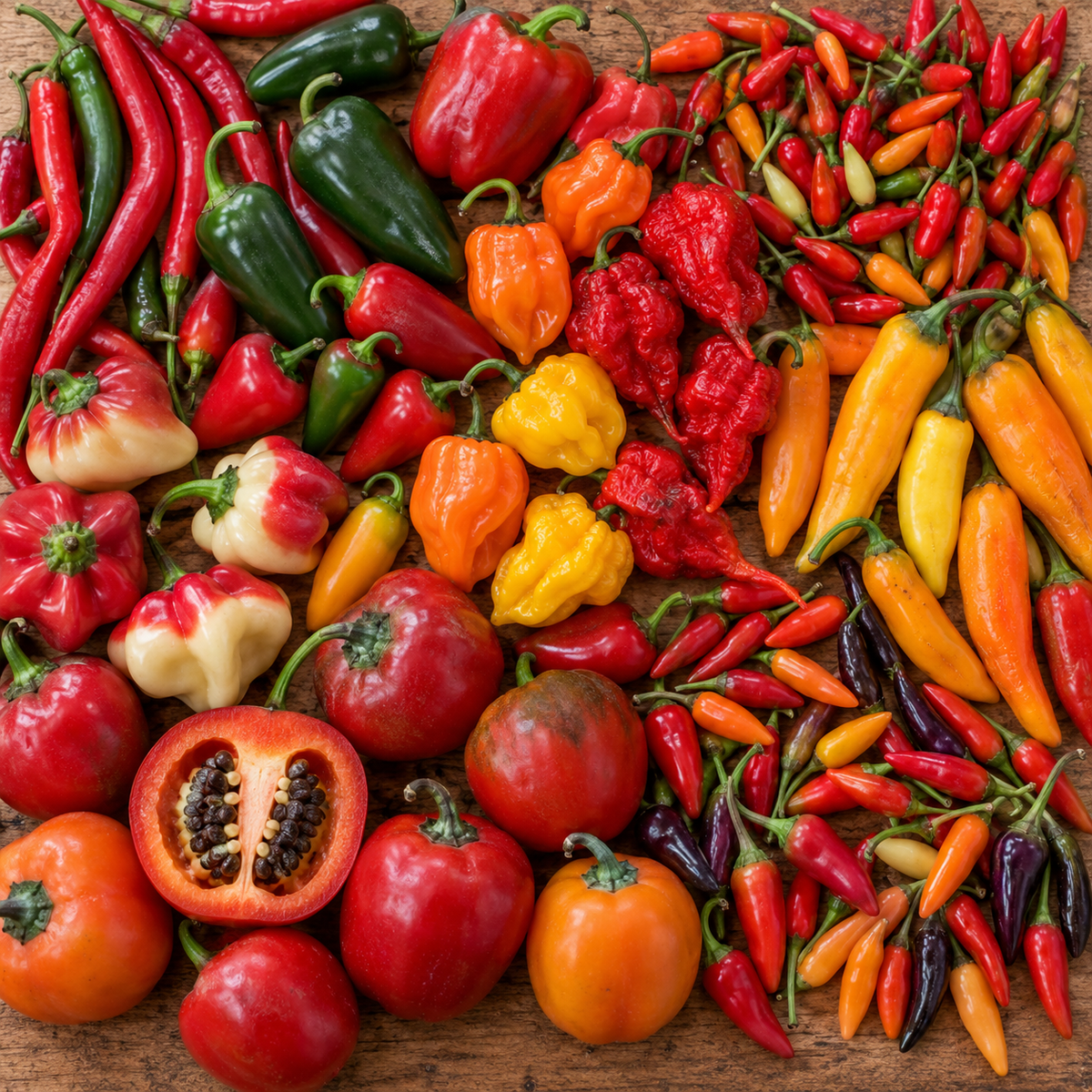
Chilli species and chilli variety: where the difference lies
Most cultivated chilli varieties belong to five domesticated species of the genus Capsicum: C. annuum, C. chinense, C. baccatum, C. pubescens and C. frutescens. Beyond these, there are also further wild Capsicum species. Species and variety, then, aren't the same thing — and that's exactly the difference we're happy to explain in more detail here.
The species is the botanical group. A variety is a specific selection within that group, such as jalapeño within Capsicum annuum or Carolina Reaper within Capsicum chinense. The species gives you an initial clue to typical traits, but heat, flavour and growth can still vary considerably within a single species.
The five cultivated Capsicum species at a glance
| Species | Typical traits | Examples | Suited to |
|---|---|---|---|
| Capsicum annuum | very wide variety range; mild to hot | Jalapeño, cayenne, bell pepper | versatile starting point, pot and bed |
| Capsicum chinense | often fruity aroma; from mild to extreme | Habanero, Carolina Reaper | flavour-driven sauces and superhots |
| Capsicum baccatum | often vigorous growth; frequently fruity aji aromas | Lemon Drop, aji varieties | long season, large plants |
| Capsicum pubescens | hairy leaves, dark seeds, thick-walled fruit | Rocoto | cooler, but frost-free positions |
| Capsicum frutescens | often compact, upright fruit set | Tabasco | sauces and pot growing |
Capsicum annuum
Capsicum annuum is especially widespread with us and remarkably rich in varieties. The species includes mild bell peppers just as much as jalapeños and hot cayenne types. It suits very different growing goals and spans compact as well as tall-growing varieties.
You'll find examples from our range in the Capsicum annuum collection, including our jalapeño plant when in season.
Capsicum chinense
Many well-known habaneros and superhots belong to Capsicum chinense. A distinctly fruity aroma is typical of numerous varieties, but not every chinense is equally extreme in heat — mild representatives exist too. For slow-growing superhots from this group, it's always worth starting your seedlings especially early with us.
You'll find our selection in the Capsicum chinense collection. The Carolina Reaper is an extreme example of this species.
Capsicum baccatum
Capsicum baccatum includes many South American aji varieties. With us, these plants often grow vigorously and need corresponding space as well as a long season. We often describe the aromas as fruity or citrusy, though this always depends on the variety. A well-known example in our range is the Lemon Drop.
More varieties are listed in our Capsicum baccatum collection.
Capsicum pubescens
You can recognise this species by its lightly hairy leaves and usually dark seeds. Rocotos come from regions with comparatively cooler conditions and are considered more cold-tolerant than many other chillies — though they're still not frost-hardy. Their fruit is often thick-walled and, with us, especially well suited to stuffing.
Capsicum frutescens
The best-known representative here is the Tabasco chilli. Many varieties of this species carry their fruit upright and develop a direct, straightforward heat. The botanical boundaries with individual annuum groups are somewhat complex in cultivation history — for growing at home, though, the specific variety description is what matters most.
Which chilli species suits you?
- Versatile and straightforward: many Capsicum annuum varieties.
- Fruity aroma or extreme heat: Capsicum chinense.
- Large plants and aji aromas: Capsicum baccatum.
- Thick-walled fruit and a somewhat cooler position: Capsicum pubescens.
- Compact sauce classics: Capsicum frutescens.
The species is only the beginning. From there, choose based on space, ripening time, desired heat and use. Our guide Growing chilli explains the next step.
Frequently asked questions about chilli species
Are there really only five chilli species?
No. Five species have been especially widely domesticated and cultivated — alongside these, further wild Capsicum species also exist.
Which species is the hottest?
Many record-breaking and superhot varieties belong to Capsicum chinense. The species alone, though, doesn't guarantee a particular heat level.
Can different species be crossed?
Crosses are possible to varying degrees depending on the species combination. For true-to-type seed, controlled pollination and stable selection are also needed.