The Scoville scale ranks the heat of chilli in Scoville Heat Units (SHU). The higher the value, the more heat-active capsaicinoids a sample contains.
Why we prefer heat levels over SHU figures for our own products
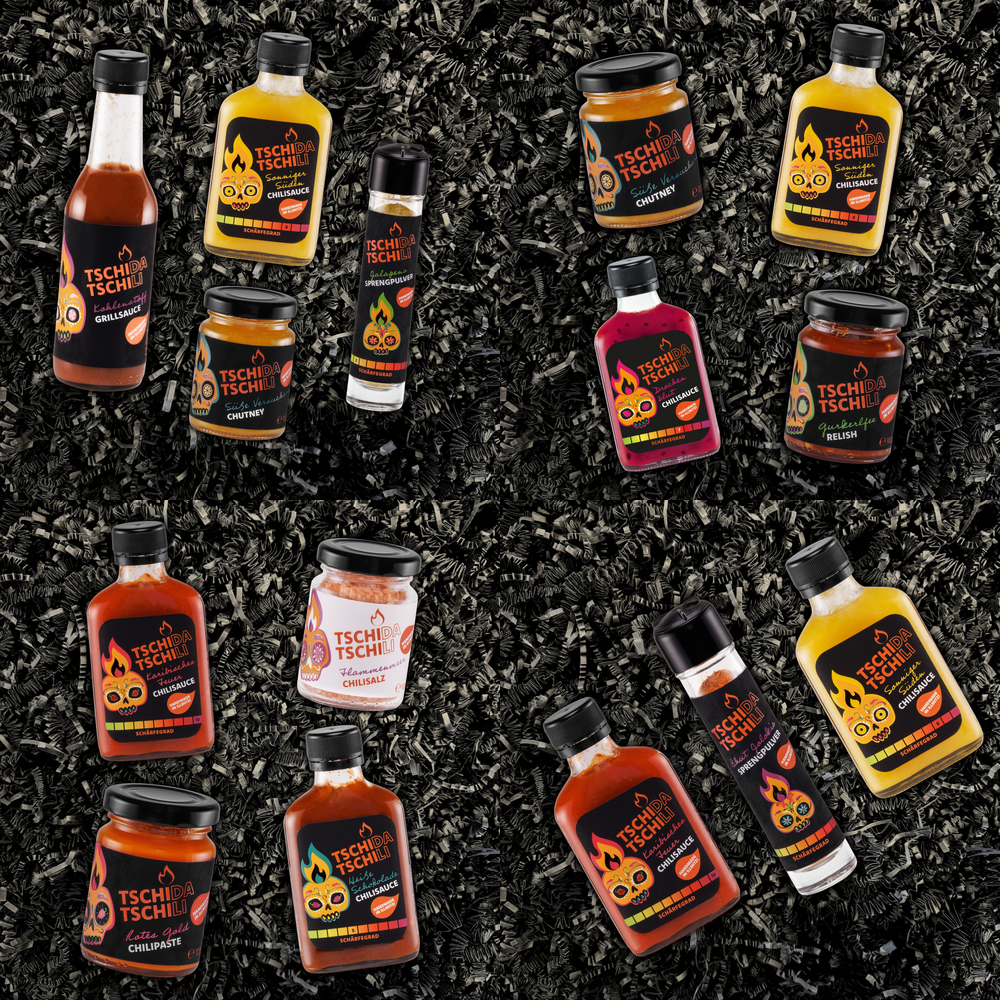
For everyday use, honestly, a number somewhere between 1 and 2,000,000 isn't very easy to grasp — that's why we label our own products with a simple heat level system from 1 to 12 instead. We're still happy to explain in detail here how these numbers actually come about.
What does Scoville mean?
The SHU unit describes the heat of a chilli, a sauce or an extract. It's named after US pharmacist Wilbur Scoville, who developed a dilution test in 1912: a chilli extract was diluted with sweetened water until test subjects could no longer detect any heat.
This original test depended heavily on the perception of the particular test panel. Today, laboratories determine capsaicinoids far more precisely, usually with high-performance liquid chromatography (HPLC), and then convert the result into SHU.
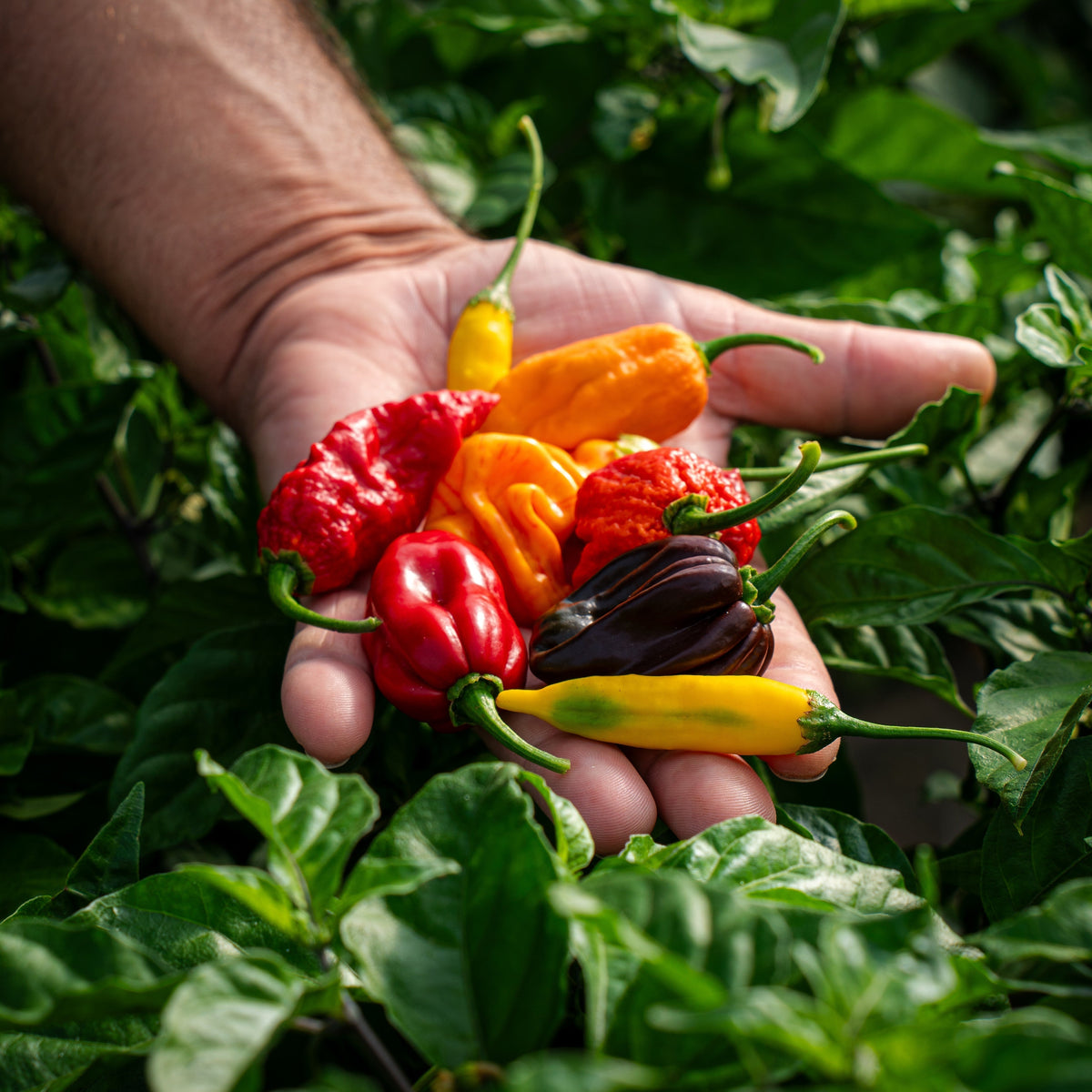
Scoville table: from bell pepper to Pepper X
| Example | Typical range | Classification |
|---|---|---|
| Bell pepper | 0 SHU | not hot |
| Mild chilli pepper | around 100–1,000 SHU | very mild |
| Jalapeño | around 2,500–8,000 SHU | mild to medium-hot |
| Cayenne | around 30,000–50,000 SHU | hot |
| Habanero | often around 100,000–350,000 SHU | very hot |
| Bhut Jolokia | often around 800,000–1,000,000 SHU | extremely hot |
| Carolina Reaper | often around 1.4–2.2 million SHU | Superhot |
| Pepper X | Avg. 2,693,000 SHU | confirmed record holder |
| Pure capsaicin | around 16 million SHU | lab reference, not a food to try |
These values aren't exact promises for every single fruit, but rather an order of magnitude. You can find out more about the currently confirmed record holder in our article Hottest Chilli in the World.
Why do varieties have a Scoville range?
Even fruit from the same plant can vary in heat. Genetics, ripeness, temperature, water and nutrient supply, and growing conditions all influence how many capsaicinoids a chilli forms. On top of that, there are differences in sampling and lab methods. That's why, in our variety descriptions, we usually give a range rather than a single, precise figure.
Where is the heat located in a chilli?
Capsaicinoids form mainly in the internal tissue around the placenta. The seeds themselves don't produce heat, but they often come into contact with capsaicin-containing tissue and oil. If you remove the seeds from a chilli, you usually also remove part of the placenta at the same time — which noticeably mellows the dish.
Why does the same SHU figure feel different?
SHU is a chemical classification, not a guarantee of how hot something will feel to you personally. Tolerance, portion size, preparation, fat and sugar content, and how evenly the heat is distributed in a dish all noticeably change the impression. A small amount of evenly distributed sauce feels different from a piece of fresh chilli with concentrated internal tissue.
Reading Scoville figures on chilli sauces correctly
With sauces, look closely at whether the figure refers to the finished sauce, the chilli variety used, or an added extract — these values aren't directly comparable. A sauce made from a million-SHU chilli doesn't automatically have that same value itself.
Frequently asked questions about the Scoville scale
What is SHU?
SHU stands for Scoville Heat Units.
How is chilli heat measured today?
The capsaicinoids are usually determined analytically in a lab. The result can then be converted into SHU.
How much Scoville can a person handle?
There's no generally safe threshold that applies to everyone — tolerance and dosage are very individual. Very hot products don't belong in children's hands, and you should generally always dose them sparingly.
Which heat level suits me?
Start well below what you think your limit is. Our chilli plants are described by heat level and available seasonally in spring.