Pre-orders for 2027 open in early January. Plants are expected to ship from mid-April.
Out of stock
Inventory on the way
What makes it special?
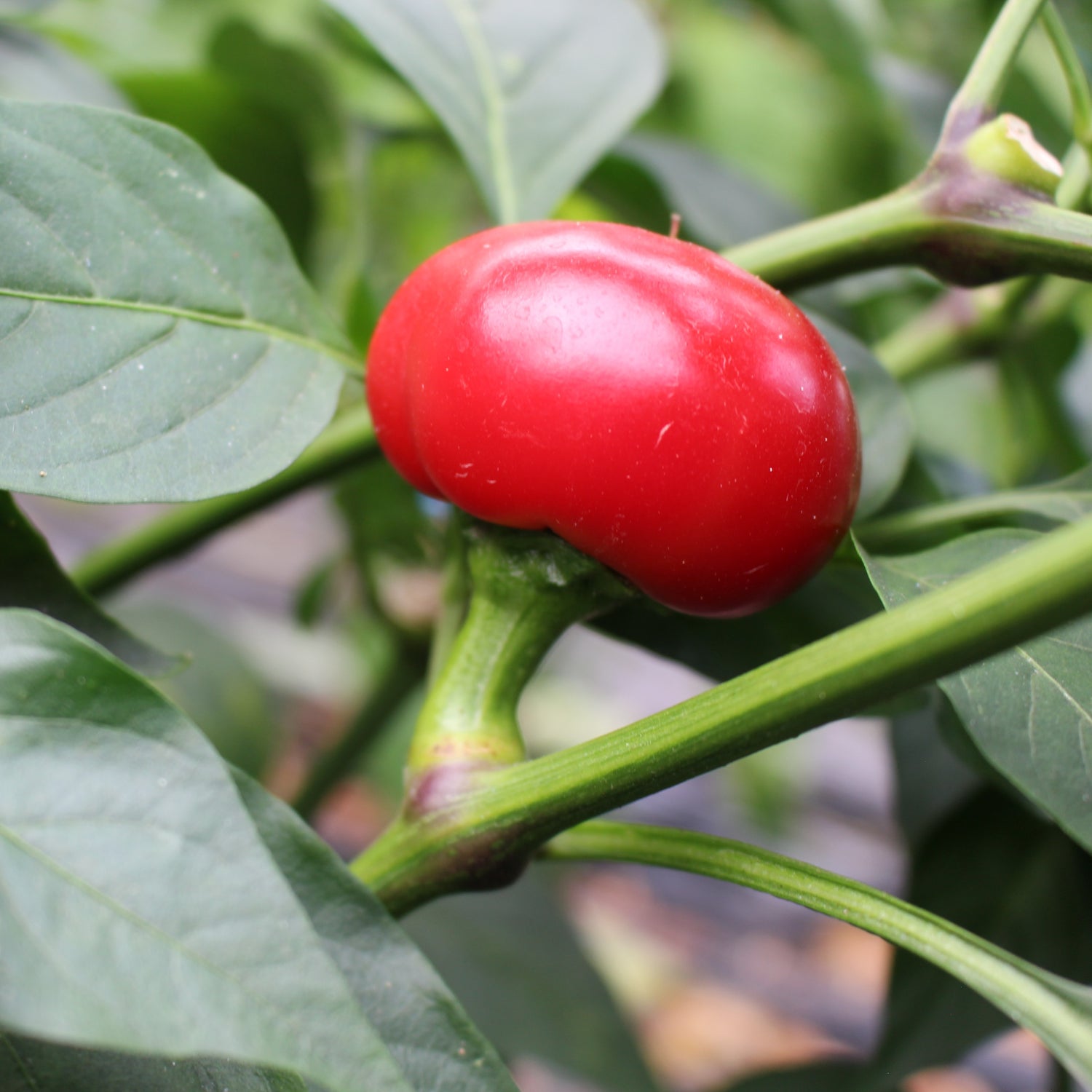
Cherry Bomb is a classic cherry chilli with round, thick-fleshed fruit and mild to pleasant heat. Its compact shape and juicy flesh make it especially versatile in the kitchen.
It's a heat level 2 variety. That also makes it suitable for dishes where chilli aroma and fruit should take centre stage, without the heat covering everything up.
We raise our Cherry Bomb chilli ourselves in Illmitz. It's especially popular stuffed, pickled or roasted whole.
Flavour & Use
Cherry Bomb tastes fresh, lightly sweet and pepper-aromatic, with a mild to moderate chilli note. Typical figures are around 2,500–5,000 SHU, though individual lines and growing conditions can differ.
Thanks to its thick flesh, the variety is excellent for stuffing – for example with cream cheese, feta or bold vegetable fillings. It also works very well pickled, roasted, as antipasti or in chutneys.
For drying, it's less efficient than thin-walled chillies given its meaty fruit, but processed fresh, it plays to its strengths.
Fruit & Plant
Cherry Bomb chilli belongs to Capsicum annuum. Its fruit is round to lightly flattened, thick-walled, and ripens from green to a bright red.
Typical Cherry Bomb fruit reaches around 3–6 cm and visually recalls large cherries or small round peppers.
The plant grows rather compact to bushy and is therefore well suited to a pot, patio and sheltered outdoor beds.
Growing & Care
Cherry Bomb chilli belongs to Capsicum annuum. Its fruit is round to lightly flattened, thick-walled, and ripens from green to a bright red.
Typical Cherry Bomb fruit reaches around 3–6 cm and visually recalls large cherries or small round peppers.
The plant grows rather compact to bushy and is therefore well suited to a pot, patio and sheltered outdoor beds.
Variety Data
Botanical species: Capsicum annuum
Heat: mild to moderate; heat level 2 with us
Scoville: typically approx. 2,500–5,000 SHU
Fruit colour: green → red
Fruit shape: round to lightly flattened, thick-fleshed
Fruit size: typically approx. 3–6 cm
Growth: compact to bushy
Position: full sun, warm and sheltered
Suitable for: pot, patio, greenhouse and sheltered outdoor spots
Pot size: at least 8 litres, ideally 10 litres; 15–20 litres ideal
Use: stuffing, pickling, roasting, antipasti and chutneys
Overwintering: possible frost-free
Special feature: round, thick-fleshed cherry chilli
Couldn't load pickup availability
1 / 1
Cherry Bomb Chilli - Chilli Plant
Regular price€3,99 EUR
Regular priceSale price€3,99 EUR
WANT TO LEARN MORE?
Cherry Bomb – a mild cherry chilli for stuffing and pickling
The Cherry Bomb chilli is a compact Capsicum annuum with round, meaty fruit. It's exactly this combination that makes it a particularly practical kitchen variety: it brings a recognisable chilli note while staying mild enough to process whole fruit. You'll find more annuum varieties among our Capsicum annuum.
How hot is a Cherry Bomb chilli?
Cherry Bomb reaches around 2,500–5,000 SHU. With this Scoville range, Cherry Bomb is a heat level 2 variety and can be found in the category mild chilli plants with heat level 0–3. That places it well below very hot chillies and suits it well when flavour, flesh and preparation should take centre stage.
A round chilli for stuffing and pickling
The red fruit is thick-walled and juicy. That makes stuffing with cream cheese, feta, rice or vegetables especially natural. Pickled in a jar, roasted in the oven or as antipasti, the round fruit also looks great. Its shape also lets it be served attractively whole. You'll find a basic recipe with vinegar and variations in our guide to pickling chillies. Because of its meaty fruit, the variety is less suited to drying than thin-walled chillies – it shows its strengths when used fresh.
When is Cherry Bomb ripe?
The fruit starts green and ripens to a bold red. It can already be used green, while fully ripe it develops more sweetness and aroma. The round shape recalls large cherries – hence the name cherry chilli, or Cherry Bomb.
Cherry Bomb or Santa Fe Grande?
Both are mild, thick-fleshed annuum varieties for stuffing and pickling. Santa Fe Grande forms conical fruit around 7–9 cm long that ripens from pale yellow through orange to red, and sits at around 3,000–5,000 SHU. Cherry Bomb is the round variant with 3–6 cm fruit that ripens from green to red.
Growing Cherry Bomb in a pot
A warm, sunny spot and even water supply without waterlogging are the most important basics. In a pot, we recommend at least 8 litres, ideally 10 litres; with 15–20 litres, more root room is available. The plant grows compact to bushy and is frost-sensitive, but can be overwintered frost-free. You'll find more varieties from mild to extremely hot among our chilli plants, raised by us.
Absolutely recommended! I’m completely impressed with this chili plant seller. The quality of the plants is outstanding – strong, healthy, and clearly grown with passion and expertise.
The absolute highlight for me, however, was that this seller is one of the few places that offers my all-time favorite variety, the Lemon Drop chili. I’ve finally found a reliable source for this fantastic variety!
Shipping was fast, and the plants were perfectly packaged, so they arrived in excellent condition. I can wholeheartedly recommend this seller to any chili lover looking for top quality and fast delivery. I will definitely be ordering here again!
— Mr A.T. via Google
My annual joy
“My annual joy has arrived – little chili plants, grown with so much love!”
I’m so happy with my chili plants!
Just like every year, they arrived in perfect condition – healthy, fresh, and full of life. I’m incredibly grateful for the care and love you put into every order. These little plants bring me so much joy, and it truly shows how much you do to make your customers happy.
Thank you so much for your wonderful service! I’m already looking forward to ordering again next year.
— Mrs. L.Ü. via Google
longterm customer
I’ve been buying my chili powder from the Tschida family for years, and it’s the best you can get. The family is always very friendly and helpful as well. I can wholeheartedly recommend their products to everyone.
— Mr. H.K. via Google
#1 Spice supplier
Super friendly service when buying chili plants, and the products are truly excellent. My #1 source for heat :) The ultimate compliment came from an Indian colleague who said that with Tschida chili sauces, he can finally enjoy the level of heat he knows from home here in Europe!
— Mr J.K. via Google
Simply top!
Tschida Tschili – where heat and flavor come together in perfect harmony. The chili products are simply outstanding. I love spicy food, but many products just burn your tongue without delivering any real flavor. With Tschida Tschili, it’s completely different. For an experienced palate, everything is very enjoyable. The flavors are perfectly matched to the level of heat, resulting in truly delicious products.
I visit the farm from time to time as part of my culinary tours with groups. What can I say? Jan and his family are simply the perfect hosts – friendly, authentic, and genuinely local. I always really enjoy visiting you!
— Mrs. J.Z. via Google
WE'RE CELEBRATING!
More than just chillies is growing here right now: our new headquarters and our new greenhouse are taking shape. With our topping-out celebration we're marking an important milestone – and we'd love you to share in it!
The discount is applied automatically, you don't need to do anything else.