Der Vorverkauf für 2027 startet Anfang Jänner. Der Pflanzenversand erfolgt voraussichtlich ab Mitte April.
Out of stock
Inventory on the way
What makes it special?
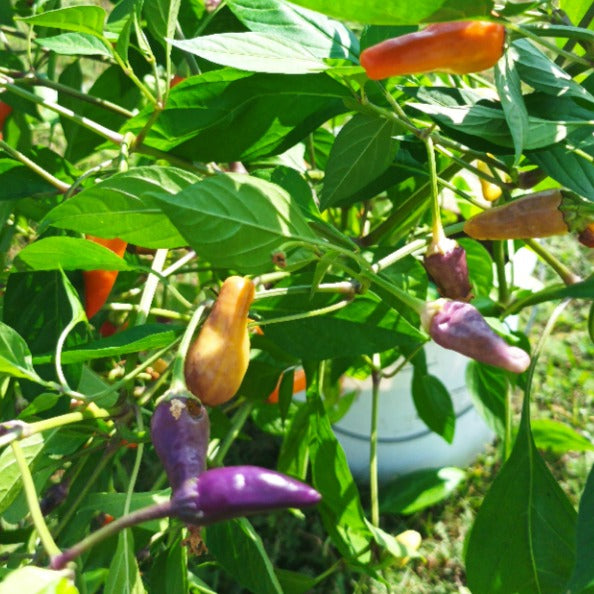
Black Scorpion Tongue verbindet kräftige Schärfe mit einem starken Farbspiel. Die länglichen Früchte starten sehr dunkel violett bis nahezu schwarz und reifen später rot ab. Zusammen mit dem dunklen Laub macht das die Sorte zu einer auffälligen essbaren Zierchili.
Geschmacklich ist sie fruchtig und leicht süßlich. Wir empfehlen sie allen, die eine kompaktere Capsicum-annuum-Sorte mit ungewöhnlicher Optik und deutlich mehr Schärfe als klassische Jalapeños oder Cayenne-Typen suchen.
Flavour & Use
Black Scorpion Tongue is usually described at around 20,000–100,000 Scoville Heat Units. Figures vary considerably depending on source and line, which is why we deliberately give a broad range.
The aroma is fruity, lightly sweet and spicy. The fruit is great fresh for salsas and hot dishes, for chilli sauces, fermentation or drying.
Fruit & Plant
Die länglichen, spitz zulaufenden Früchte sind meist ungefähr 5–7 cm lang. Unreif wirken sie dunkel violett bis fast schwarz; bei Vollreife färben sie sich rot.
Black Scorpion Tongue gehört zu Capsicum annuum und bleibt meist kompakter als viele Baccatum- oder Chinense-Sorten. Je nach Kulturbedingungen erreicht sie ungefähr 50–100 cm und wächst buschig bis aufrecht.
Growing & Care
Wir empfehlen einen sonnigen, warmen und geschützten Standort. Viel Licht fördert die dunkle Färbung von Früchten und Pflanzenteilen.
Für die Topfkultur sind mindestens 8 Liter, besser 10 Liter sinnvoll; ideal sind 15–20 Liter, wenn ausreichend Platz vorhanden ist. Nährstoffreiches, durchlässiges Substrat verwenden, gleichmäßig gießen und Staunässe vermeiden. Regelmäßige, maßvolle Düngung mit Tomaten- oder Gemüsedünger unterstützt Blüte und Fruchtbildung.
Die Sorte ist nicht frosthart, kann aber frostfrei überwintert werden.
Variety Data
Botanische Art: Capsicum annuum Herkunft: USA Schärfe: scharf bis sehr scharf Scoville: ca. 20.000–100.000 SHU; Angaben je nach Linie unterschiedlich Geschmack: fruchtig, leicht süßlich, würzig Fruchtfarbe: dunkelviolett bis schwarz → rot Fruchtgröße: ca. 5–7 cm Fruchtform: länglich, schmal und spitz zulaufend Pflanzenhöhe: ca. 50–100 cm, abhängig von Standort und Kulturbedingungen Wuchs: buschig bis aufrecht Reifezeit: mittel bis mittelspät Standort: sonnig, warm und geschützt Geeignet für: Topf, Terrasse, Gewächshaus und geschütztes Freiland Topfgröße: mindestens 8 Liter, besser 10 Liter; ideal 15–20 Liter Verwendung: frisch, Salsa, Chilisaucen, Fermentation und Trocknen Überwinterung: frostfrei möglich Besonderheit: dunkel abreifende Früchte mit auffälligem Farbwechsel zu Rot
Couldn't load pickup availability
1 / 1
Black Scorpion Tongue - Chilli Plant
Regular price€5,99 EUR
Regular priceSale price€5,99 EUR
WANT TO LEARN MORE?
Black Scorpion Tongue – dunkle Chili mit kräftiger Schärfe
The Black Scorpion Tongue chilli plant is a striking Capsicum annuum variety that combines decorative growth with culinary use. Its fruit starts dark violet to almost black and turns red at full ripeness. That means the plant visibly changes through the season and stays far more exciting than a purely ornamental chilli. The variety comes from the USA; you'll find more varieties of this species among our Capsicum annuum chilli plants.
How hot is Black Scorpion Tongue?
Black Scorpion Tongue reaches around 20,000–100,000 Scoville Heat Units, bringing considerably more heat than classic jalapeños or cayenne types. In the kitchen, the heat is clearly present; the fruit also brings fruity, lightly sweet and spicy notes.
Dark fruit, red finale
The elongated fruit is especially dark when unripe. As it ripens, it eventually turns red. Plenty of sunlight supports the bold anthocyanin colouring. If you collect dark varieties, take a look at Black Kathumby too: in our growing, it stands out especially for its almost black foliage.
Black Scorpion Tongue in the kitchen
The slender, pointed fruit usually grows around 5–7 cm long. Fresh, it suits salsas and hot dishes, and it is also good for chilli sauces, fermenting and drying. How to turn your harvest into your own sauce and control the heat is shown in our guide to making chilli sauce.
A hot rarity for pot and patio
With its rather compact to medium growth, Black Scorpion Tongue grows well in a pot. We still recommend enough root room so the plant grows sturdily and can form plenty of fruit. A sunny, sheltered spot, even watering and good drainage are the most important basics. Another unusually coloured annuum variety is Buena Mulata. You'll find more unusual varieties among our rare chilli plants.
Pot size, growth and overwintering
The plant grows bushy to upright, reaches around 50–100 cm and ripens medium to medium-late. For pot growing, at least 8 litres makes sense, ideally 10 litres; 15–20 litres is ideal. Black Scorpion Tongue isn't frost-hardy but can be overwintered frost-free – how that works is shown in our guide to overwintering chillies.
Absolutely recommended! I’m completely impressed with this chili plant seller. The quality of the plants is outstanding – strong, healthy, and clearly grown with passion and expertise.
The absolute highlight for me, however, was that this seller is one of the few places that offers my all-time favorite variety, the Lemon Drop chili. I’ve finally found a reliable source for this fantastic variety!
Shipping was fast, and the plants were perfectly packaged, so they arrived in excellent condition. I can wholeheartedly recommend this seller to any chili lover looking for top quality and fast delivery. I will definitely be ordering here again!
— Mr A.T. via Google
My annual joy
“My annual joy has arrived – little chili plants, grown with so much love!”
I’m so happy with my chili plants!
Just like every year, they arrived in perfect condition – healthy, fresh, and full of life. I’m incredibly grateful for the care and love you put into every order. These little plants bring me so much joy, and it truly shows how much you do to make your customers happy.
Thank you so much for your wonderful service! I’m already looking forward to ordering again next year.
— Mrs. L.Ü. via Google
longterm customer
I’ve been buying my chili powder from the Tschida family for years, and it’s the best you can get. The family is always very friendly and helpful as well. I can wholeheartedly recommend their products to everyone.
— Mr. H.K. via Google
#1 Spice supplier
Super friendly service when buying chili plants, and the products are truly excellent. My #1 source for heat :) The ultimate compliment came from an Indian colleague who said that with Tschida chili sauces, he can finally enjoy the level of heat he knows from home here in Europe!
— Mr J.K. via Google
Simply top!
Tschida Tschili – where heat and flavor come together in perfect harmony. The chili products are simply outstanding. I love spicy food, but many products just burn your tongue without delivering any real flavor. With Tschida Tschili, it’s completely different. For an experienced palate, everything is very enjoyable. The flavors are perfectly matched to the level of heat, resulting in truly delicious products.
I visit the farm from time to time as part of my culinary tours with groups. What can I say? Jan and his family are simply the perfect hosts – friendly, authentic, and genuinely local. I always really enjoy visiting you!
— Mrs. J.Z. via Google
WE'RE CELEBRATING!
More than just chillies is growing here right now: our new headquarters and our new greenhouse are taking shape. With our topping-out celebration we're marking an important milestone – and we'd love you to share in it!
The discount is applied automatically, you don't need to do anything else.