Pre-orders for 2027 open in early January. Plants are expected to ship from mid-April.
Out of stock
Inventory on the way
What makes it special?
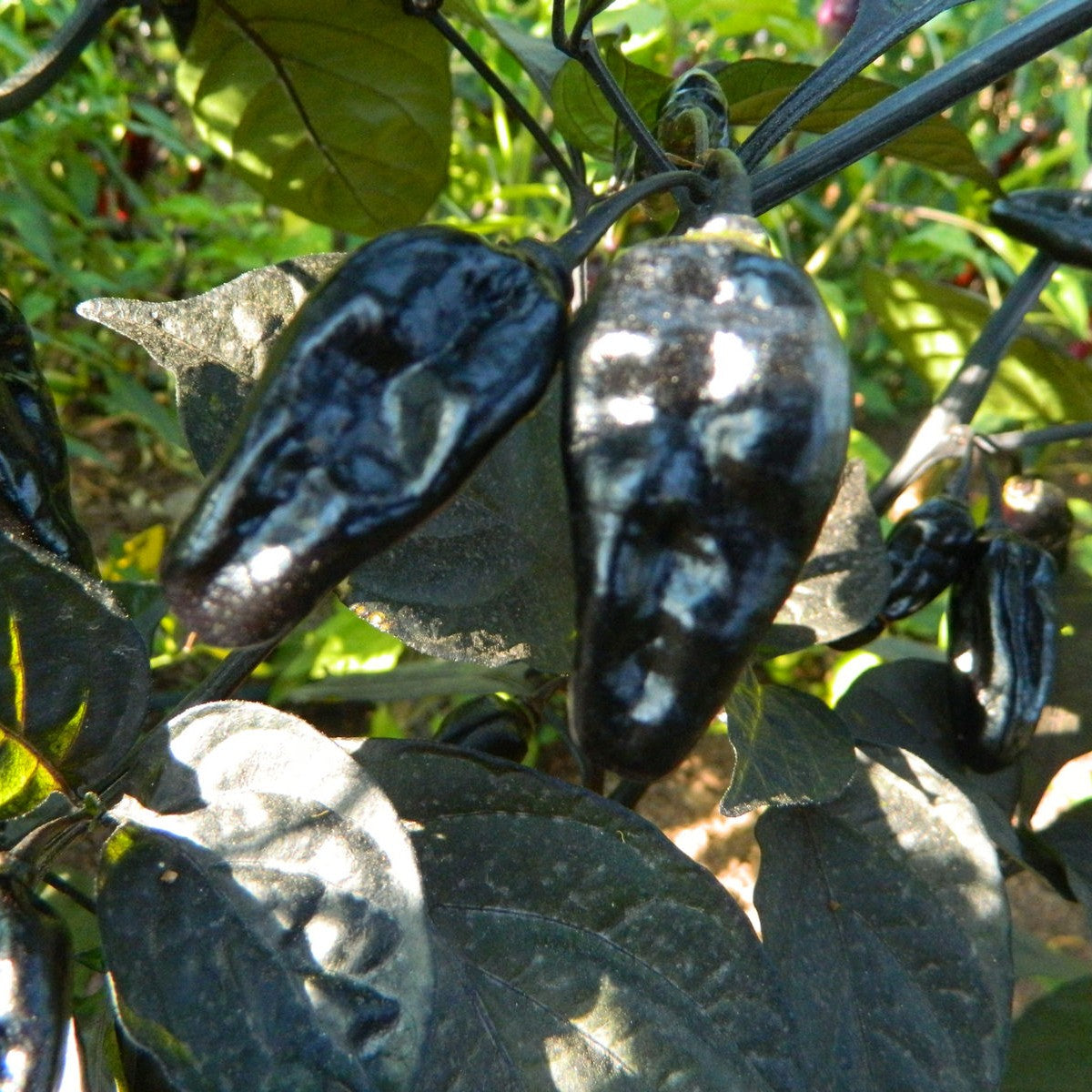
For us, Black Kathumby is one of the darkest and most decorative chillies in our range. What makes it special, we see very clearly every year: the more sun the plant gets, the darker its leaves and shoots become – until the plant looks almost black.
As a young plant, by contrast, it can still look surprisingly plain and green. Only with increasing sun exposure does it develop its typical character. Add to that violet-black fruit that only fully ripens very late. If you bring patience, you get an extraordinary chilli that looks almost like an ornamental plant – but is edible and hot.
Flavour & Use
Black Kathumby is a heat 8 variety and can be found in the chilli plants with heat level 8–10 category. Reliable, consistent Scoville measurements for this rare variety are barely documented, and figures for different lines vary considerably.
The aroma is spicy and fruity with a clear heat. The fruit can be used fresh for seasoning, salsas and sauces, or dried. With very dark fruit, it's worth waiting for full ripeness – though this variety takes noticeably longer than many classic annuum chillies.
Fruit & Plant
Black Kathumby belongs to Capsicum chinense. Under intense sun, leaves and shoots can turn very dark violet to almost black. The fruit starts violet to black and shifts towards dark red as it ripens further.
The plant grows vigorously and bushy, reaching roughly 70–120 cm depending on position. Particularly striking is the strong transformation from an often still-green young plant stage to the dark, mature plant.
Growing & Care
For intense dark colouring, we recommend as sunny a spot as possible. At the same time, the plant should be gradually accustomed to direct sun if it was previously grown more sheltered.
In a pot, we recommend at least 8 litres, ideally 10 litres; 15–20 litres is ideal with enough space. Use a nutrient-rich, well-draining substrate, water evenly and avoid waterlogging. Since the fruit can take a long time to fully ripen, a warm, sheltered spot is especially helpful.
Black Kathumby is not frost-hardy but can be overwintered frost-free.
Variety Data
Botanical species: Capsicum chinense
Origin: rare Kathumby line; origin not consistently documented
Heat: very hot; Tschida rating 8/10
Scoville: no reliable consistent SHU figure available
Flavour: spicy, fruity, clearly hot
Fruit colour: violet to black → dark red at full ripeness
Fruit size: small to medium, variable by line
Fruit shape: elongated to slightly conical
Plant height: approx. 70–120 cm, depending on location and growing conditions
Growth: vigorous, bushy, very dark colouring in sun
Ripening time: late to very late
Position: full sun, warm and sheltered
Suitable for: pot, patio, greenhouse and sheltered outdoor spots
Pot size: at least 8 litres, ideally 10 litres; 15–20 litres ideal
Use: fresh, salsa, chilli sauces and drying
Overwintering: possible frost-free
Special feature: extremely dark foliage in sun and a very long ripening period
Couldn't load pickup availability
1 / 1
Black Kathumby - Chilli Plant
Regular price€5,99 EUR
Regular priceSale price€5,99 EUR
WANT TO LEARN MORE?
Black Kathumby – an unusually dark chilli from our growing
The Black Kathumby chilli plant is a variety where our own growing experience says a lot. As a young plant, it can initially look almost ordinary and green. As sun exposure increases, though, the picture changes noticeably: leaves, shoots and fruit get darker and darker. Under good conditions, Black Kathumby is, for us, one of the darkest chillies we know.
Why does Black Kathumby turn almost black?
The dark colouring is driven by anthocyanins and visibly increases under strong sunlight. That's why plants in sunny spots often look considerably darker than specimens grown with less light. This makes the variety especially decorative. If you're after another striking dark chilli, you can compare it with the Black Scorpion Tongue. The Pimenta da Neyde also turns its leaves and shoots dark violet to almost black in plenty of sun.
How hot is Black Kathumby?
Black Kathumby is a heat 8 variety and can be found in the category chilli plants with heat level 8–10. In the kitchen, it brings a clear, spicy heat to salsas, sauces or dried spice blends. The aroma is spicy and fruity; the fruit can be used fresh for seasoning or dried.
This variety calls for patience
One thing stands out to us in growing it: Black Kathumby takes a very long time for its fruit to fully ripen. The initially violet-black fruit only shifts towards dark red late in the season. A warm, sunny and sheltered spot helps make the most of the season. The Costa Rica Orange also combines dark foliage with striking fruit. You'll find more extraordinary varieties among our rare chilli plants.
Fruit and growth
Black Kathumby belongs to Capsicum chinense. Its elongated to slightly conical fruit starts violet to black and turns dark red when fully ripe. The plant grows vigorously and bushy and reaches around 70–120 cm. Especially striking is the strong change from the often still green young plant to the dark, fully grown plant. With very dark fruit, it's worth waiting for full ripeness.
Black Kathumby in a pot and overwintering
In a pot, we recommend at least 8 litres, ideally 10 litres; 15–20 litres is ideal if there's enough space. Use nutrient-rich, well-draining substrate, water evenly and avoid waterlogging. If the plant stood sheltered before, it should be gradually accustomed to direct sun. Black Kathumby isn't frost-hardy but can be overwintered frost-free – how that works is shown in our guide to overwintering chillies.
Absolutely recommended! I’m completely impressed with this chili plant seller. The quality of the plants is outstanding – strong, healthy, and clearly grown with passion and expertise.
The absolute highlight for me, however, was that this seller is one of the few places that offers my all-time favorite variety, the Lemon Drop chili. I’ve finally found a reliable source for this fantastic variety!
Shipping was fast, and the plants were perfectly packaged, so they arrived in excellent condition. I can wholeheartedly recommend this seller to any chili lover looking for top quality and fast delivery. I will definitely be ordering here again!
— Mr A.T. via Google
My annual joy
“My annual joy has arrived – little chili plants, grown with so much love!”
I’m so happy with my chili plants!
Just like every year, they arrived in perfect condition – healthy, fresh, and full of life. I’m incredibly grateful for the care and love you put into every order. These little plants bring me so much joy, and it truly shows how much you do to make your customers happy.
Thank you so much for your wonderful service! I’m already looking forward to ordering again next year.
— Mrs. L.Ü. via Google
longterm customer
I’ve been buying my chili powder from the Tschida family for years, and it’s the best you can get. The family is always very friendly and helpful as well. I can wholeheartedly recommend their products to everyone.
— Mr. H.K. via Google
#1 Spice supplier
Super friendly service when buying chili plants, and the products are truly excellent. My #1 source for heat :) The ultimate compliment came from an Indian colleague who said that with Tschida chili sauces, he can finally enjoy the level of heat he knows from home here in Europe!
— Mr J.K. via Google
Simply top!
Tschida Tschili – where heat and flavor come together in perfect harmony. The chili products are simply outstanding. I love spicy food, but many products just burn your tongue without delivering any real flavor. With Tschida Tschili, it’s completely different. For an experienced palate, everything is very enjoyable. The flavors are perfectly matched to the level of heat, resulting in truly delicious products.
I visit the farm from time to time as part of my culinary tours with groups. What can I say? Jan and his family are simply the perfect hosts – friendly, authentic, and genuinely local. I always really enjoy visiting you!
— Mrs. J.Z. via Google
WE'RE CELEBRATING!
More than just chillies is growing here right now: our new headquarters and our new greenhouse are taking shape. With our topping-out celebration we're marking an important milestone – and we'd love you to share in it!
The discount is applied automatically, you don't need to do anything else.