

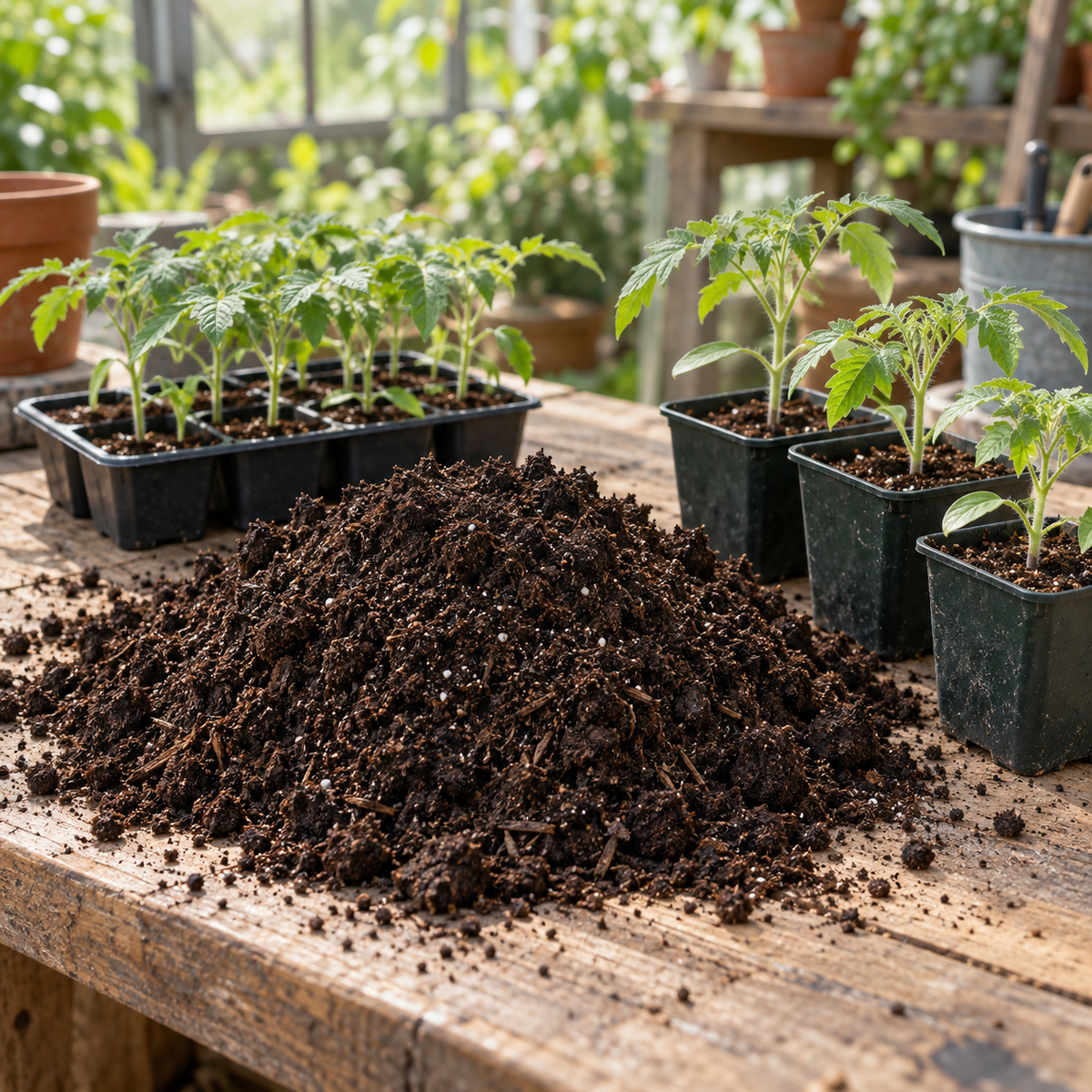
The right tomato compost: what really matters
Good tomato compost holds water, stays airy and lets any excess drain away reliably. For mature plants, it can be richer in nutrients than seed compost. In a pot, clear drainage holes matter more than a blanket layer of clay pebbles - something we see confirmed every year in our own growing in Illmitz.
What properties does tomato compost need?
- structurally stable and loose, for enough air at the roots
- good water retention without staying permanently waterlogged
- a suitable base level of nutrients
- a slightly acidic to near-neutral pH range
- free of problematic root debris, pests and heavy salt build-up
Seed compost or tomato compost?
For sowing, fine, moderately nutrient-rich seed compost is best. Once your tomatoes have been potted on and moved into larger pots, they need more structure and a bigger nutrient buffer. For large plants, vegetable or tomato compost is a practical base - what matters is the actual composition, not the name printed on the bag.
Tomato compost for pots, raised beds and open ground
| Growing location | What matters |
|---|---|
| Pot or container | enough volume, clear drainage holes, structurally stable compost |
| Raised bed | well-settled filling, nutrient-rich top layer, even moisture |
| Garden soil | improve soil structure, add compost as needed, avoid compaction |
| Greenhouse | watch for salt build-up with repeated use, maintain the soil regularly |
What pH level is suitable?
Tomatoes cope well with a range; a pH of around 6 to 7 is often the target. A seemingly precise ideal value matters less than good root conditions and a balanced supply. If problems keep recurring in a bed, a soil test is more worthwhile than treating on a hunch.
Mixing your own tomato compost
One option combines a good-quality vegetable compost with well-rotted garden compost and a structure-giving component such as mineral granules or suitable wood fibre. The ratio needs to suit your starting materials, the container and your own watering habits. Don't follow a universal recipe blindly - very fine mixes get waterlogged, while very coarse ones dry out quickly in summer.
Drainage: letting water out, not letting it sit
Every pot needs several clear holes. Cover them so compost doesn't block them, without blocking the water's path either. A thick layer of clay pebbles isn't automatically the best solution and just reduces the usable volume of compost. What matters more is a suitable container, structurally stable compost and no standing water in the saucer.
Can old compost be reused?
Only if no serious soil-borne diseases or pests occurred the previous year. Remove root debris, loosen the compost, top up with fresh material and rebalance the nutrients as needed. If disease is suspected, fresh compost is the safer choice.
Common mistakes
- too small a pot with little water and nutrient reserve
- blocked drainage holes or a permanently full saucer
- heavy, compacted garden soil used neat in a container
- too heavy a starting feed on top of already pre-fertilised compost
- reusing old compost without checking it first
You'll find out how feeding continues from here in our detailed guide Feeding Tomatoes. Young tomato plants from Illmitz are available seasonally in spring in our tomato plant selection.