

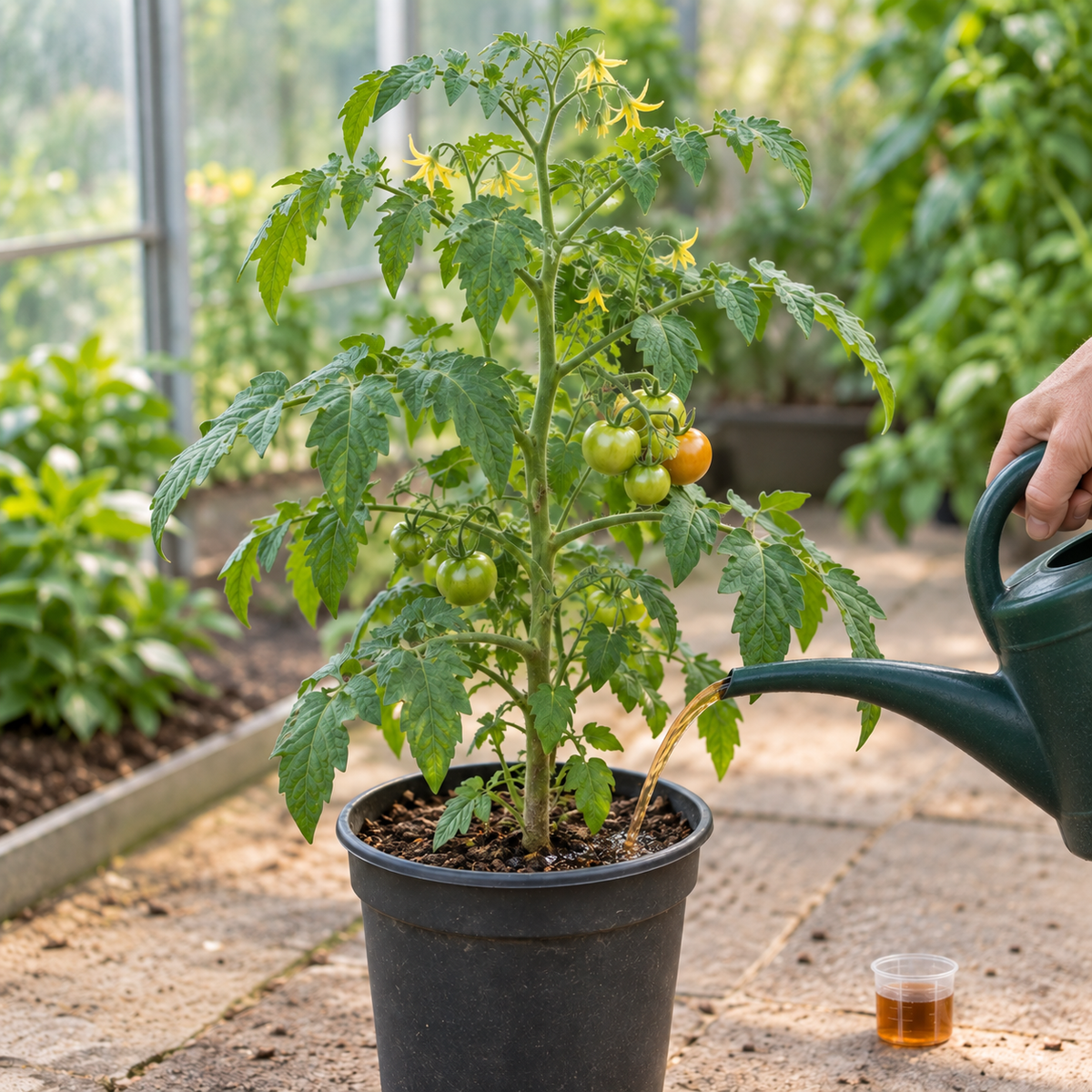
Hardly any other vegetable plant in the garden is as nutrient-hungry as the tomato. If you want a decent harvest over summer, there's no way around regular feeding - here in Illmitz, we see the difference between well-fed and poorly-fed tomatoes clearly across thousands of plants every year. One advantage you get automatically: our young plants already start off strong and well-prepared - that makes the feeding that follows a lot more forgiving than with a weak, home-grown plant.
What do tomatoes actually need?
Tomatoes need above all plenty of potassium for fruit formation, enough nitrogen for leaf growth - but not too much of it - and calcium, which quickly leads to blossom end rot if supply is irregular. A good tomato fertiliser brings these three into a balanced ratio instead of pushing growth one-sidedly.
When and how often to feed?
At planting itself, a basic feed of a little compost or a slow-release organic fertiliser is usually enough. Once the first flowers appear, nutrient demand rises noticeably - from that point we feed again every one to two weeks, right into late summer. Container plants need topping up more often than plants in a garden bed.
Organic or mineral feed?
For our own growing, we deliberately rely on organic fertilisers such as compost, hoof and horn meal or plant-based liquid feeds. They release their nutrients more slowly, which significantly lowers the risk of overfeeding.
The most common mistake: too much nitrogen
Overdo it with a nitrogen-rich fertiliser and you get lush, deep-green foliage - but disappointingly little fruit. If your tomato looks beautiful but barely sets fruit, that's usually the first thing we'd suspect.
A strong start makes the difference
A tomato plant that's already strong and healthy as a young plant forgives small later feeding mistakes far more easily than a weak one - that's exactly what we look out for in our own growing in Illmitz, before a plant is ever shipped to you. So you're not taking on an uncertain starting point, but an already robust base. You'll find more on caring for tomatoes through the season in our guides on pinching out side shoots and sowing.