

Even the best-cared-for tomato plant isn't automatically spared from problems - weather, position and watering rhythm play at least as big a role as the plant itself. Every year in our own growing in Illmitz, we see which problems crop up most often and what actually helps against them. Here's an overview of the most important ones.
Blight - the most feared tomato disease
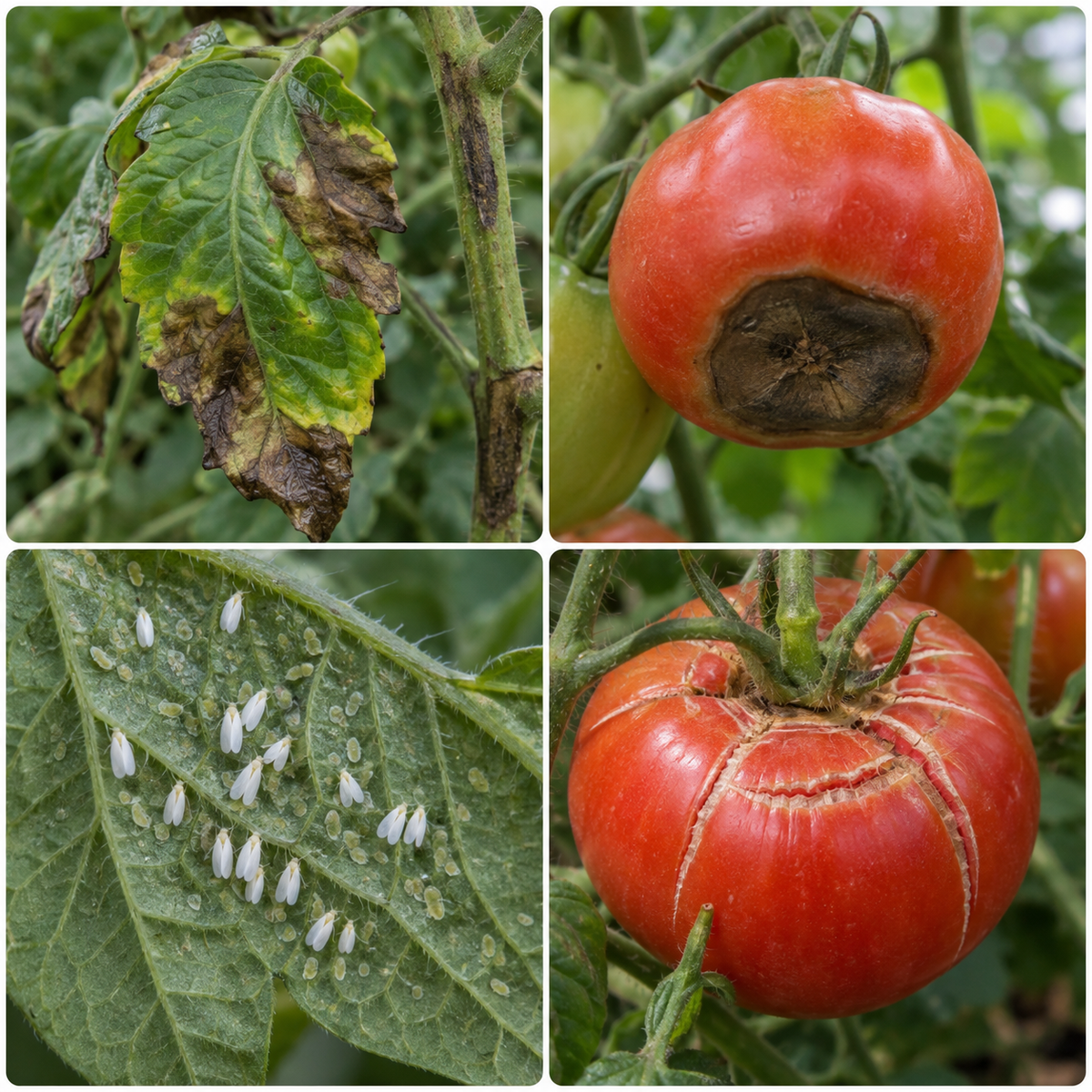
Late blight is what worries most hobby gardeners the most, and rightly so: it shows up as brown, water-soaked patches on leaves and stems that can spread across the whole plant within days in damp weather. It's caused by a fungus that multiplies rapidly in warm, humid conditions and on wet foliage. Once a plant is badly affected, it usually can't be saved - which makes prevention all the more important: keep leaves dry when watering, leave enough space between plants for good air circulation, and remove affected plant parts immediately, disposing of them in household waste rather than on the compost heap.
Blossom end rot - not a fungus, but a nutrient problem
Unlike blight, blossom end rot isn't really a disease at all, but the result of irregular water and calcium supply. It shows up as a dark, sunken patch on the underside of the fruit, usually on the first fruit of the season. The solution is almost always more even watering - if soil moisture swings widely, the plant can no longer transport the calcium that is present to the fruit properly, even if there's enough of it in the soil. You'll find more on this in our guide on feeding.
Whitefly - annoying, but usually manageable
You'll recognise whitefly by a cloud of tiny white insects rising up when you gently shake the plant. They feed on plant sap and weaken the tomato over time. Yellow sticky traps near the plants catch some of the adult insects, and regularly rinsing the undersides of the leaves with water reduces numbers further. For a heavier infestation, commercially available products approved for vegetable growing, based on potassium soap or neem oil, can help.
When fruit suddenly splits
Ripe or nearly ripe tomatoes that suddenly split open are usually a sign of overly irregular watering - typically a dry spell followed by heavy rain or a large amount of water all at once. The fruit then grows faster than the skin can keep up with, and it splits. An even watering rhythm is the most effective prevention here too.
There's more that can affect your tomato
The four problems above are the most common for us here in Illmitz, but by no means the only ones. Among diseases, we occasionally also come across grey mould, powdery and downy mildew, or various viral diseases, which usually show up as different patterns of spots, growth disorders or discolouration. Among pests, alongside whitefly, aphids, spider mites, thrips and leaf miners are also well-known troublemakers, each with its own signs and countermeasures. If your plant shows a symptom that doesn't fit here, it's often worth checking a specialised plant-disease database or asking a garden centre near you for advice.
A healthy starting point makes a lot easier
None of these problems can be fully ruled out by the choice of plant alone - weather and care always play a part too. What we can take off your hands, though, is a sturdy, healthy young plant with no prior damage as your starting point. Our young tomato plants leave Illmitz only once they're robust enough for the journey - a solid base from which good care gives you far better odds than starting from an already weakened plant.