

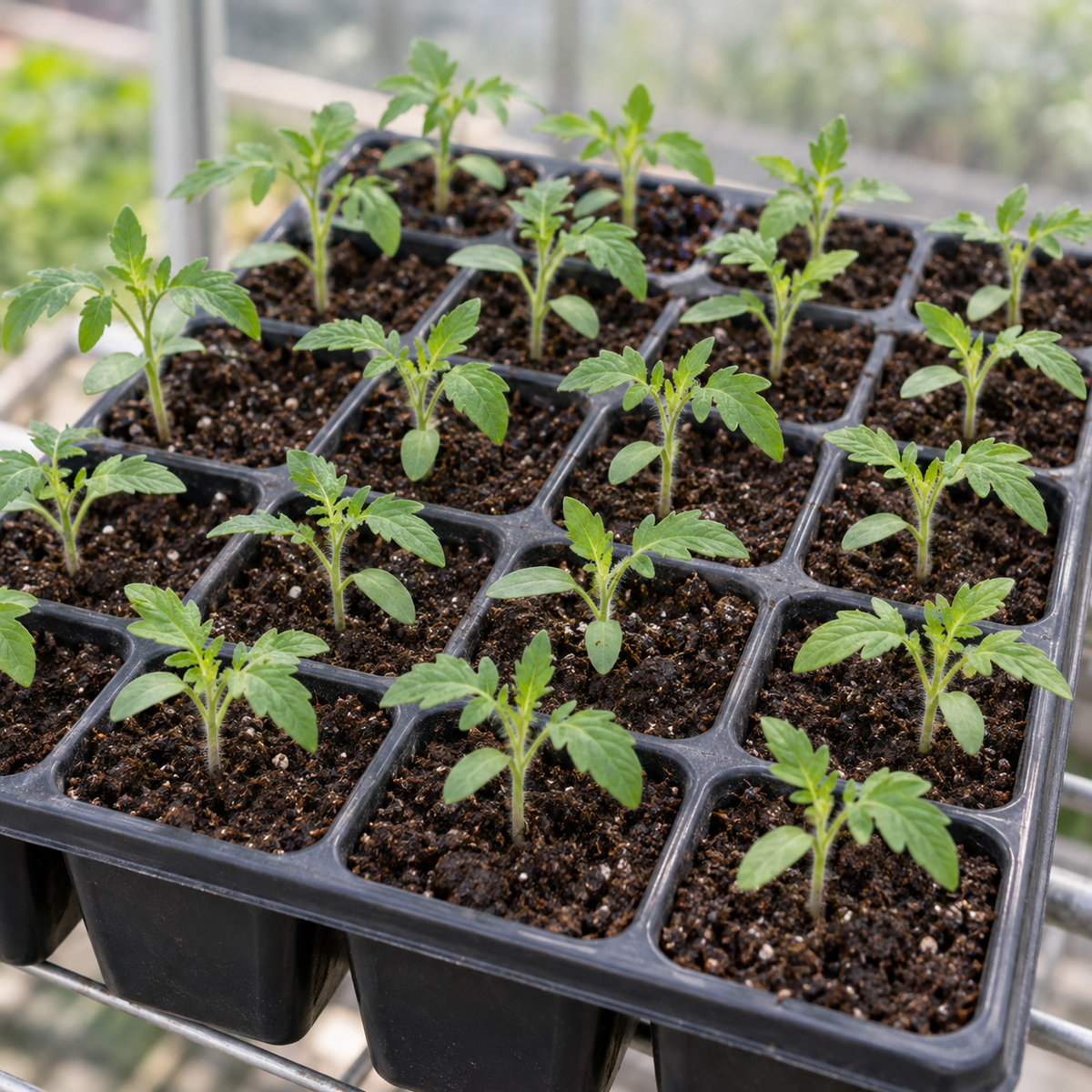
Starting tomato seedlings: your roadmap from sowing to plant
We usually sow tomatoes six to eight weeks before the planned planting-out date. For outdoor growing, March is often a good start for us - a very early sowing only pays off if you can also provide enough light. Cover the seeds thinly with soil and keep them warm and evenly moist.
When should you start tomato seedlings?
It's best to plan backwards from your desired planting date. If your tomatoes are going outdoors after the last cold nights in mid-May, sowing in March works well for most households. For a sheltered greenhouse, you can sow earlier. Without strong supplemental light, sowing in February often leads to long, leggy seedlings for us - something we wouldn't recommend.
| Goal | Typical sowing window | Important |
|---|---|---|
| heated greenhouse | from February, depending on planting date | very good light needed |
| unheated greenhouse | usually late February to March | plan for frost protection |
| outdoors or balcony | usually March to early April | six to eight weeks' lead time is often enough |
What you need for sowing
- tomato seeds
- clean seed trays or small pots with drainage
- fine, structurally stable seed compost
- spray bottle or watering can with a fine rose
- bright windowsill or grow light
- labels for variety name and sowing date
Sowing itself: the short version
The seeds go about 0.5cm deep into the seed compost, get watered in carefully, and the container is covered with clear film and aired briefly each day. You'll find the full step-by-step guide with all the details on soil, sowing depth and technique in our guide How to Sow Tomato Seeds.
Under good conditions, many varieties germinate for us within about one to two weeks. Variety, seed age and temperature can all change this.
Germination: warmth first, then light
Before the seedlings emerge, warmth does the most for germination. As soon as the first green loops appear, the cover needs to come off and the spot needs to become properly bright. At this stage, a slightly cooler temperature helps you grow more compact plants. The Iowa State University also has a good summary of different vegetables' light and germination requirements.
Avoiding leggy tomato seedlings
Long, thin stems are usually the result of too little light combined with too much warmth. Move your seedlings somewhere brighter and slightly cooler, turn the trays regularly and give the plants enough space between them. When potting on later, you can set tomatoes a little deeper - but you should still fix the underlying cause, the lack of light.
Watering and early care
Keep the soil lightly moist but not permanently wet. Waterlogging encourages root problems and damping-off. As long as your seedlings are in fresh seed compost, you usually don't need heavy feeding. After potting on, further feeding depends on the compost you're using.
When do you pot on tomatoes?
Once the first true, toothed leaves are well developed after the two seed leaves and the seedlings feel manageable, you can move them into individual pots. You'll find the full method in our step-by-step guide to potting on.
From windowsill to outdoors
Before planting out for good, your young tomatoes need to be gradually acclimatised to direct sun, wind and cooler temperatures. Start in a sheltered, shady spot and extend the time outside over about seven to ten days. Our guide When to Plant Tomatoes? explains the right timing.
Frequently asked questions about starting tomatoes from seed
Do tomato seeds need to be pre-soaked?
No. Pre-soaking is possible, but it isn't necessary for a successful sowing.
Do tomato seeds need light to germinate?
No. They're covered thinly with soil. Once they emerge, though, the seedlings need a lot of light.
What if no seeds germinate?
Check temperature, even moisture, sowing depth and seed age. Wet, cold soil is just as unhelpful as letting it dry out completely.
Is raising your own too much effort?
In spring, we offer seasonal, self-grown young tomato plants from Illmitz. You'll find current availability and delivery times directly on the relevant variety pages.