

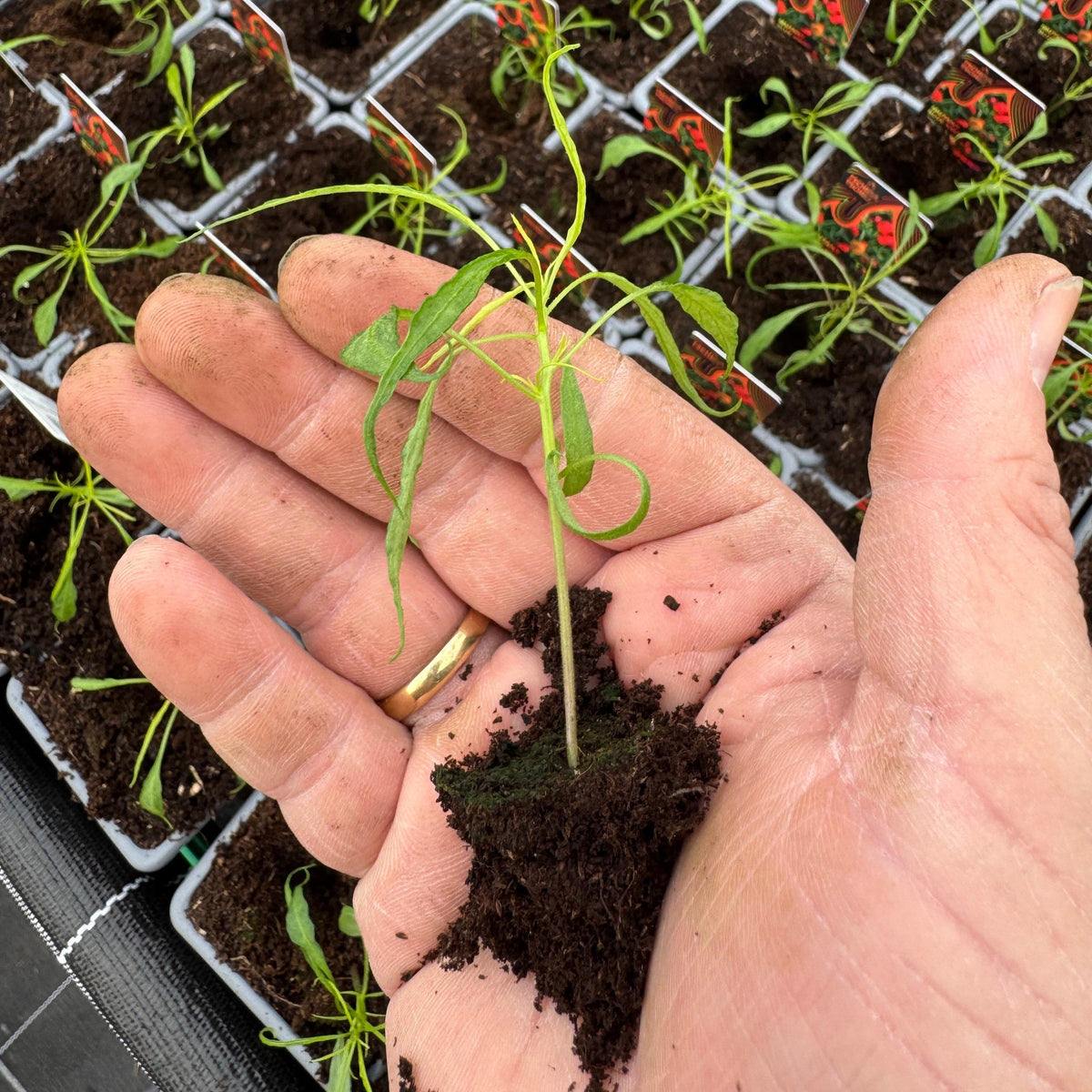
Sowing is the very first step on the way to your own tomato plant - and the one where the most can go wrong. Here in Illmitz, we sow tens of thousands of seeds every season before they become the sturdy young plants that eventually get shipped to you. It's exactly this experience that's taught us how many factors have to come together before anything grows from a tiny seed at all.
The right soil for sowing
For sowing, always use special, low-nutrient seed compost - not ordinary potting or bedding soil. Soil that's too rich in nutrients does encourage fast growth, but it makes the young roots lazy and vulnerable instead of motivating them to spread out. Seed compost is also finer and looser, which makes it easier for the seedlings' delicate roots to push through.
How to sow correctly
Fill seed trays or small pots loosely with the compost and press it down lightly without compacting it. Tomato seeds go in about half a centimetre deep - no deeper, since tomato seeds don't need light to germinate, though they do immediately afterwards. From experience, we switch the lighting on about 3-4 days after sowing, so the seedling gets enough light right from the moment it needs it. One to two seeds per pot is plenty; push in more and the seedlings will end up competing with each other unnecessarily later on. After sowing, moisten the soil carefully but thoroughly, ideally with a fine spray bottle rather than a watering can, so the seeds don't get washed away. We use multi-cell trays ourselves, with exactly one seed per cell. That way we can monitor our germination rates and catch any problems early.
The right germination conditions
Tomato seeds germinate most reliably at a constant 20 to 24°C - room temperature is enough in most homes, while a spot on a radiator or a dedicated heat mat speeds the process up further. Even moisture matters: the soil should neither dry out nor stay permanently wet, which encourages rot. A clear cover - cling film or a propagator lid, for example - keeps moisture constant, but should be aired briefly each day.
If seeds won't germinate
If germination doesn't happen, it's usually down to one of three reasons: temperatures too cold, soil too dry, or simply old seed. Most tomato varieties germinate within 6 to 14 days - if nothing has shown after three weeks, it's usually more worthwhile trying again with fresh seed than waiting any longer.
After germination, the process continues
As soon as the first seed leaves appear, the young plants need above all one thing: plenty of light, or they'll grow long and thin instead of sturdy. We explain the next step, moving them into their own pots, in detail in our guide on potting on.
Or you can skip this whole process
Sowing, germination, the first delicate weeks - this is exactly the phase we handle for you here in Illmitz, before a plant is even ready to be shipped. Our young tomato plants have already successfully been through all of this. You don't need to choose the right seed or risk a failed sowing - you start straight away with a sturdy plant that's ready to go.