

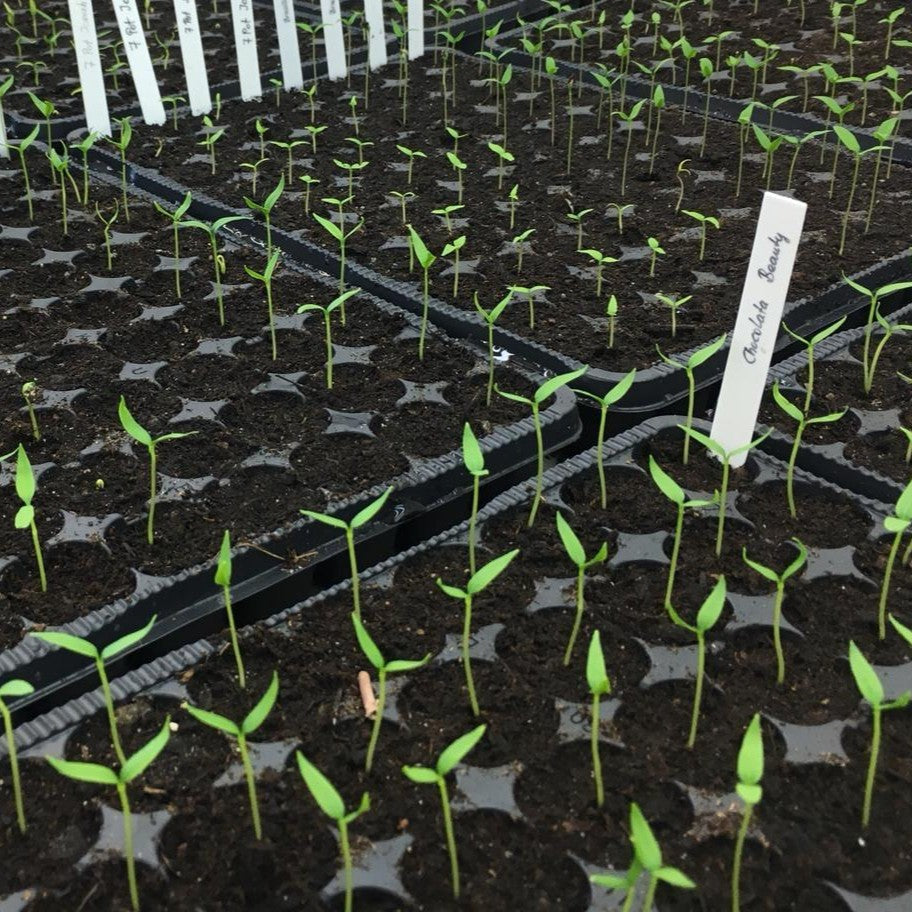
Growing chilli: from sowing to planting out
For many varieties, growing chilli starts for us as early as winter or early spring. The seeds need warmth to germinate; after they emerge, plenty of light, controlled moisture and later gradual hardening off are what matter most. Your chilli plants should only go outside permanently once cold nights are reliably over.
Chilli growing through the year
| Stage | Typical timing | What matters |
|---|---|---|
| Sowing slow-growing superhots | often December to February | plan for supplemental light and a long growing period |
| Sowing most other varieties | often January to March | stagger by species and ripening time |
| Pricking out and potting on | once true leaves have developed | keep bright, avoid overwatering |
| Hardening off | about 7 to 14 days before planting out | acclimatise slowly to sun and wind |
| Planting out | after cold nights have ended | soil and nights must be warm enough |
These are guide values for Austria and Germany. A slow-growing Capsicum chinense usually needs more lead time with us than many Capsicum annuum varieties. You can find out which botanical groups exist in our comparison of the five cultivated chilli species.
Seed or a ready-grown young plant?
With seed, you get an especially wide choice of varieties and experience the whole process yourself. In return, you need warmth, light, space and time early in the year. A young plant saves you exactly this demanding start-up phase. You'll find the neutral comparison with us at Chilli from seed or a young plant?.
Sowing chilli: step by step
- Fill clean pots or seed trays with loose seed-starting compost.
- Place one to two seeds per container about 0.5 to 1 centimetre deep.
- Moisten the substrate carefully and keep it evenly moist, not wet.
- Place somewhere warm; with us, many varieties germinate reliably around 25 °C, though species-specific differences are possible.
- Ventilate any cover daily and remove it once seedlings emerge.
- Move seedlings immediately somewhere very bright and slightly cooler than during germination.
A heat mat can provide stable warmth but doesn't guarantee germination. Seed quality, age, variety, moisture and temperature always work together.
Light after germination
Too little light leads to long, thin stems. A bright windowsill isn't always enough in the depths of winter. A grow light should illuminate evenly and be positioned so the leaves neither overheat nor stretch towards the light source. Don't rotate your plants as a substitute for enough light — improve the amount of light instead.
Pricking out and repotting chillies
Once true leaves are well developed beyond the seed leaves, you can separate closely spaced seedlings. Hold them by a leaf if possible, not by the delicate stem. The next pot change follows later, once the root ball fills the container well. Every pot needs clear drainage holes.
Hardening off chilli plants
Plants raised indoors aren't used to direct sun and wind. On a mild day, first place them briefly in bright shade. Gradually extend the time and slowly increase the amount of sun. Bring them back inside on cold nights.
Planting chilli in a pot, bed or greenhouse
- Pot: a sufficiently large container, structurally stable soil and reliable drainage.
- Bed: a sunny, warm, wind-sheltered spot with loose soil.
- Greenhouse: plenty of warmth, but watch ventilation and pest control in summer.
Set the plant at roughly the same depth it was growing before, and firm the substrate only lightly. Water in thoroughly. Spacing depends on the variety's final size and training method.
Common mistakes when growing chilli
- sowing too early without enough light
- seed compost that stays wet permanently
- a cold windowsill despite warm room air
- direct midday sun without hardening off first
- a final pot that's too small, with blocked drainage holes
- heavy feeding right after every repotting
After planting out, our guide Caring for chilli plants correctly takes over. For processing at the end of the season, our chilli harvest hub guides you through the options.
Chilli plants from Illmitz
If you'd rather skip the raising stage, we offer seasonally home-grown chilli plants from Illmitz in spring. You'll find availability and shipping times directly on each variety's page.