Pre-orders for 2027 open in early January. Plants are expected to ship from mid-April.
Out of stock
Inventory on the way
What makes it special?
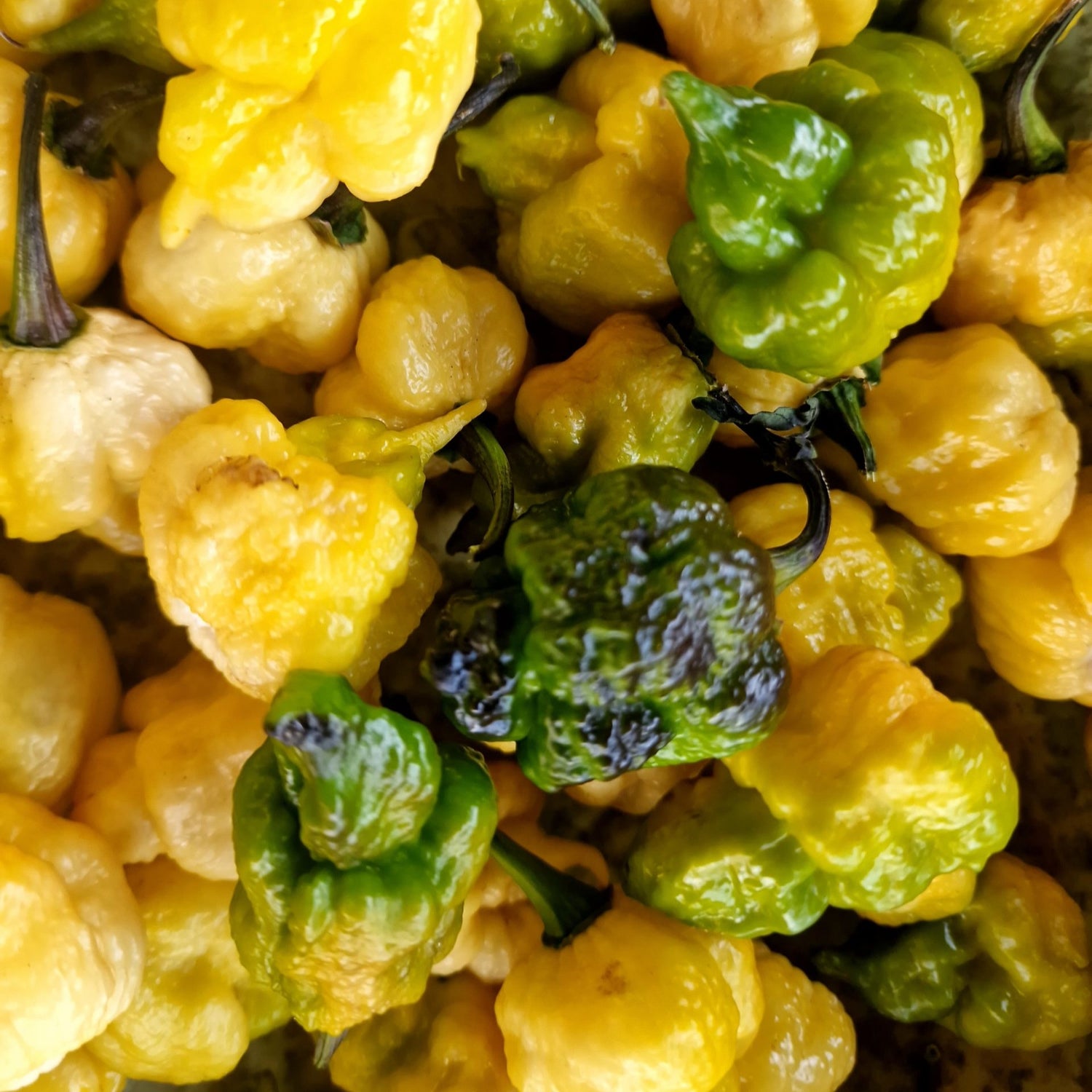
Da Hulk is a modern superhot rarity that earns its name for more than just its heat. The fruit changes colour unusually dramatically: from dark violet to black, through deep dark green, to cream or yellowish-cream ripening stages.
Add to that dark foliage and very vigorous growth. Under good conditions, the variety can grow exceptionally tall. We recommend Da Hulk for experienced chilli fans who have room for a large plant and are deliberately looking for a rare, not fully standardised superhot line.
Flavour & Use
With its extreme heat, Da Hulk is a clear heat 10+ variety and firmly in the superhot range. For this rare breeding line, however, there's no reliable, standardised Scoville measurement that we'd seriously cite as a fixed figure.
The aroma is described as bold, aromatic and lightly floral, but it's quickly overtaken by the extreme heat. Tiny amounts are enough for sauces, ferments, powders or spice blends.
Fruit & Plant
The fruit can look different depending on the phenotype. Typical is a striking colour change from dark violet to black, through dark green, to cream or yellow-cream. Shape and size can also vary within this modern line.
Da Hulk belongs to Capsicum chinense and grows very vigorously, tall and well-branched. Under good conditions, around 100–200 cm is possible. Dark stems and dark foliage add to the plant's exceptional appearance.
Growing & Care
We recommend a full-sun, very warm and sheltered spot. For the long ripening time of a superhot, a greenhouse or polytunnel is especially helpful.
Da Hulk can grow noticeably larger than many chilli varieties. We therefore recommend at least 10 litres of pot volume; 15–20 litres or more is ideal if you have the space. A sturdy stake can be useful given the tall growth and fruit weight. Use a nutrient-rich, well-draining substrate, water evenly and avoid waterlogging.
The variety is not frost-hardy but can be overwintered frost-free.
Variety Data
Botanical species: Capsicum chinense
Origin: modern superhot cross; rare breeding line
Heat: extremely hot; Tschida rating 10+
Scoville: no reliable standardised measurement available
Flavour: aromatic, lightly floral, extremely hot
Fruit colour: dark violet to black → dark green → cream to yellowish-cream
Fruit size: variable depending on phenotype
Fruit shape: irregular, heavily wrinkled to elongated; variable within the line
Plant height: approx. 100–200 cm, depending on location and growing conditions
Growth: very vigorous, tall and well-branched
Ripening time: late
Position: full sun, very warm and sheltered
Suitable for: large pot, greenhouse, polytunnel and very sheltered outdoor spots
Pot size: at least 10 litres; ideally 15–20 litres or larger
Use: extremely hot sauces, fermentation, drying and powder
Overwintering: possible frost-free
Special feature: unusual colour change and very vigorous growth of a rare superhot line
Couldn't load pickup availability
1 / 1
Da Hulk - Chilli Plant
Regular price€5,99 EUR
Regular priceSale price€5,99 EUR
WANT TO LEARN MORE?
Da Hulk – a rare superhot with dark foliage and colour change
The Da Hulk chilli plant is a modern superhot line for collectors and real chiliheads. As its fruit ripens, it can go through an unusual colour journey: from dark violet or almost black, through bold dark green, to cream or yellowish-cream tones. Combined with dark foliage and very vigorous growth, the result is a plant that clearly stands apart from classic red superhots. Botanically, Da Hulk belongs to Capsicum chinense.
How hot is Da Hulk?
With its extreme heat, Da Hulk is a clear heat 10+ variety and firmly in the superhot range. The tiniest amounts are enough for sauces, ferments or powder.
Da Hulk in the kitchen
The aroma is bold and lightly floral, but is quickly overtaken by the extreme heat. The fruit suits extremely hot sauces, fermenting, drying and powder. How to dry your harvest in the air, in the oven or in a dehydrator is shown in our guide to drying chillies.
Why can Da Hulk fruit look different?
With modern crosses and rare breeding lines, shape, colouring and expression can vary more than with standard varieties stabilised over decades. That's part of the appeal of Da Hulk. If you're looking for a clearly defined, well-known red superhot as a comparison, the Carolina Reaper offers an established counterpoint.
A superhot that can use plenty of space
Under good conditions, Da Hulk can reach around 100–200 cm, growing noticeably larger than many compact chillies. We therefore recommend a larger pot, plenty of warmth and a sturdy stake if needed. A greenhouse or polytunnel helps this late-ripening variety make the most of the season. You'll find more extreme varieties in our super hot chilli plants (heat level 10+++), and other unusual lines among our rare chilli plants.
Pot size and overwintering
For Da Hulk, we recommend at least 10 litres of pot volume; 15–20 litres or more is ideal if there's enough space. Use nutrient-rich, well-draining substrate, water evenly and avoid waterlogging. The variety isn't frost-hardy but can be overwintered frost-free – how that works is shown in our guide to overwintering chillies.
Absolutely recommended! I’m completely impressed with this chili plant seller. The quality of the plants is outstanding – strong, healthy, and clearly grown with passion and expertise.
The absolute highlight for me, however, was that this seller is one of the few places that offers my all-time favorite variety, the Lemon Drop chili. I’ve finally found a reliable source for this fantastic variety!
Shipping was fast, and the plants were perfectly packaged, so they arrived in excellent condition. I can wholeheartedly recommend this seller to any chili lover looking for top quality and fast delivery. I will definitely be ordering here again!
— Mr A.T. via Google
My annual joy
“My annual joy has arrived – little chili plants, grown with so much love!”
I’m so happy with my chili plants!
Just like every year, they arrived in perfect condition – healthy, fresh, and full of life. I’m incredibly grateful for the care and love you put into every order. These little plants bring me so much joy, and it truly shows how much you do to make your customers happy.
Thank you so much for your wonderful service! I’m already looking forward to ordering again next year.
— Mrs. L.Ü. via Google
longterm customer
I’ve been buying my chili powder from the Tschida family for years, and it’s the best you can get. The family is always very friendly and helpful as well. I can wholeheartedly recommend their products to everyone.
— Mr. H.K. via Google
#1 Spice supplier
Super friendly service when buying chili plants, and the products are truly excellent. My #1 source for heat :) The ultimate compliment came from an Indian colleague who said that with Tschida chili sauces, he can finally enjoy the level of heat he knows from home here in Europe!
— Mr J.K. via Google
Simply top!
Tschida Tschili – where heat and flavor come together in perfect harmony. The chili products are simply outstanding. I love spicy food, but many products just burn your tongue without delivering any real flavor. With Tschida Tschili, it’s completely different. For an experienced palate, everything is very enjoyable. The flavors are perfectly matched to the level of heat, resulting in truly delicious products.
I visit the farm from time to time as part of my culinary tours with groups. What can I say? Jan and his family are simply the perfect hosts – friendly, authentic, and genuinely local. I always really enjoy visiting you!
— Mrs. J.Z. via Google
WE'RE CELEBRATING!
More than just chillies is growing here right now: our new headquarters and our new greenhouse are taking shape. With our topping-out celebration we're marking an important milestone – and we'd love you to share in it!
The discount is applied automatically, you don't need to do anything else.