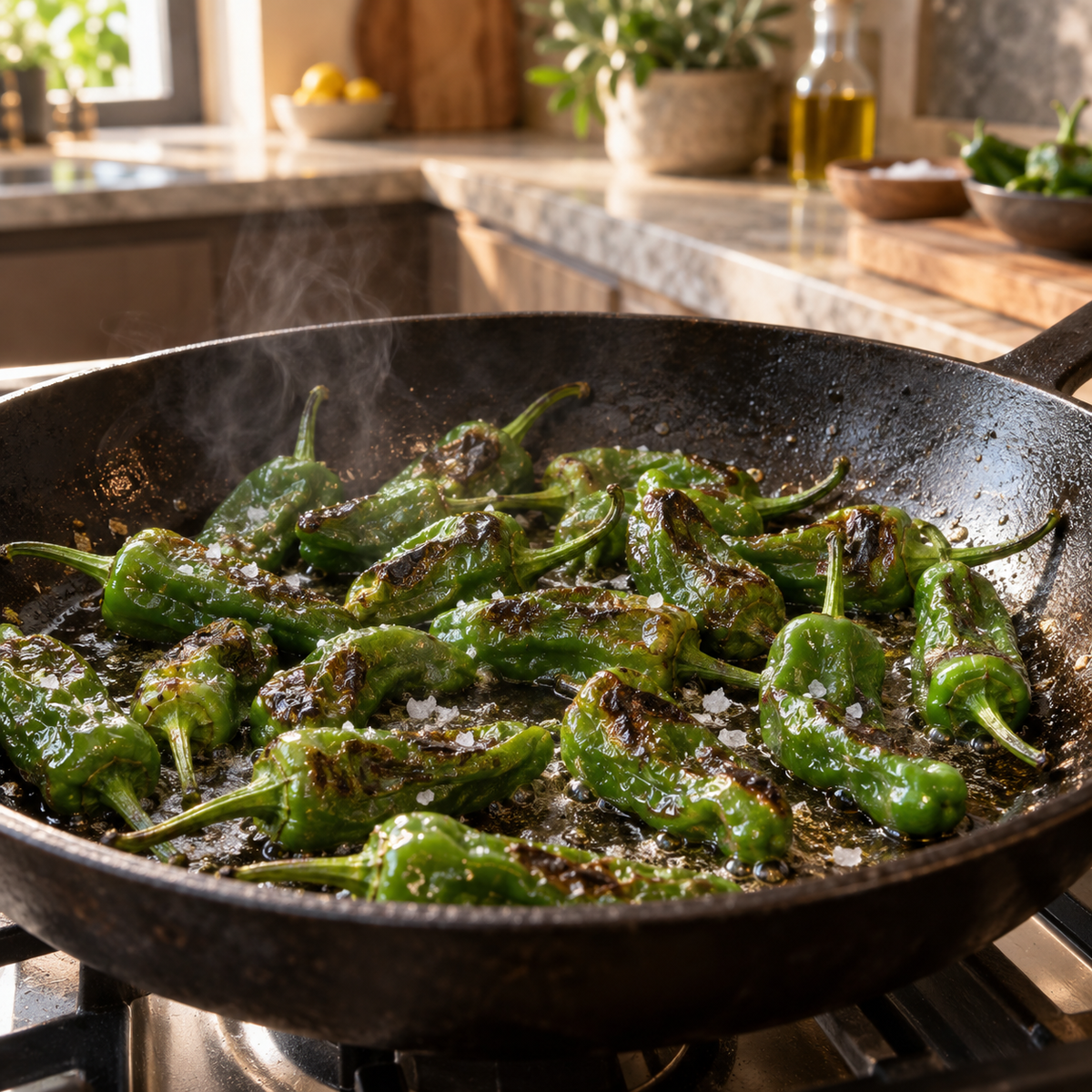
Pimientos de Padrón are one of the few dishes where not knowing is part of the experience: most peppers taste mild, but roughly one in ten can be surprisingly hot – and nobody knows which one in advance.
Why Not Every Pepper Is Equally Hot
Genetics, ripeness and growing conditions interact to different degrees in Capsicum annuum, even within the same harvest. That makes Pimientos de Padrón one of the few chilli varieties where heat is deliberately played up as a moment of surprise rather than something you can reliably calculate.
The Pepper Needs to Be Dry
Moisture on the pepper is the most common reason the hot oil spits heavily when frying. Pimientos patted completely dry avoid that problem and also blister more evenly, rather than steaming in places.
Pan, Plancha or Grill: The Same Heat Philosophy
Whether in a heavy pan, on a plancha or in a grill basket, what matters in every version is high, direct heat that blisters the skin quickly without cooking the pepper through and turning it soft inside. That contrast between crisp, blistered skin and a firm-to-the-bite interior is exactly what makes the dish.
Why the Stem Isn't Eaten
You eat the whole pepper, seeds included – only the stem is left as a handy grip for picking up the hot pepper. The heat is concentrated mainly in the inner placental tissue, not in the seeds themselves.
You'll find Padrón chilli plants for growing your own in our Heat Level 0-3 category.