

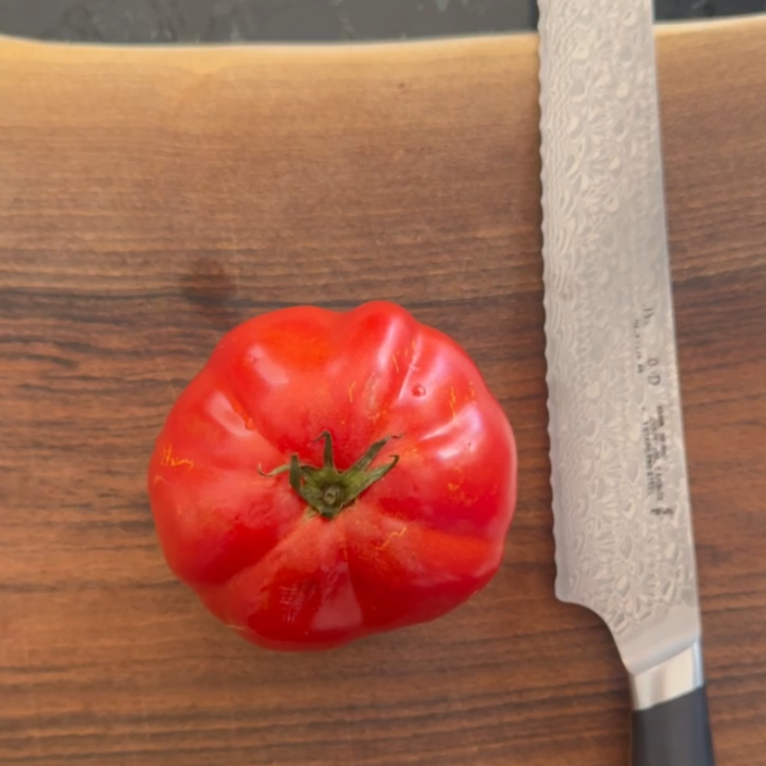
A large tomato harvest can be stored fresh, turned into sauce, passata, soup, salsa or chutney, dried, frozen or given away. Sort ripe, still-ripening and damaged fruit first — that way you deal with the most fragile ones first and avoid unnecessary loss.
Sorting your tomato harvest
- Set aside undamaged, ripe tomatoes for eating fresh and short-term storage.
- Cook very ripe or split but otherwise sound fruit straight away.
- Let green, healthy fruit ripen further separately.
- Discard mouldy, fermenting-smelling or rotten tomatoes.
- Label your varieties if flavour and use matter to you.
10 ideas for a big tomato harvest
1. Eat fresh and store properly
Fully ripe tomatoes usually taste more flavourful at room temperature than straight from the fridge. Store them somewhere airy, shaded and free of pressure, and check on them daily. Use the ripest fruit first.
2. Cook tomato sauce
Beefsteak tomatoes and very ripe fruit make a nicely concentrated sauce. You can simply cook onion, garlic and herbs in with it. Cool a freshly cooked sauce and use it soon, or freeze it in portions — for a shelf-stable supply at room temperature you need a tested canning method.
3. Make passata
Cook the tomatoes soft and pass them through a food mill. Passata is a neutral base for pasta, soup and pizza. Without a validated hot-fill or canning method, it stays a fridge or freezer product.
4. Make salsa
Firm tomatoes, onion, chilli, lime and herbs make a fresh salsa. Put it in the fridge after making it and eat it soon. For a smoky version, chipotle works well — find out what that is in our chipotle guide.
5. Cook tomato soup
Soft, very ripe tomatoes are excellent for soup. Roasting them in the oven concentrates their flavour even further. Freeze finished soup in portions once it's cooled.
6. Dry tomatoes
Meaty varieties with little juice dry more efficiently. Halve or slice them, remove any damaged spots and dry in a controlled way until no moist areas remain. Sun-dried tomatoes in oil aren't a safe unrefrigerated store without a tested method.
7. Freeze tomatoes
You can freeze tomatoes whole, diced, passed through a mill or as sauce. Raw fruit softens after thawing but works very well for cooking. Note the portion size and date directly on the container.
8. Cook chutney or ketchup
Chutney combines tomato, acidity, sweetness and spices; ketchup is passed more finely. The recipe and acidity determine shelf life. Without a tested method, store both chilled and use them up soon.
9. Pickle tomatoes
Vinegar pickles and marinated tomatoes are two different things. A shelf-stable pantry version needs a tested recipe. Freshly marinated tomatoes belong in the fridge.
10. Swap, give away or preserve together
You don't have to process a surplus alone. Swap different varieties, give away a labelled mix, or organise a shared cooking day. Only pass on healthy fruit, and briefly explain ripeness and use for rarer varieties.
Which tomato suits what?
| Tomato type | Good for |
|---|---|
| Beefsteak tomatoes | sauce, soup, sandwiches, passata |
| Plum and Roma tomatoes | sauce, passata, drying |
| Cocktail and cherry tomatoes | fresh, oven dishes, salsa |
| Dark tomatoes | fresh, salad, bread and variety tastings |
| Very ripe, soft tomatoes | cook straight away, if sound |
We explain the colour and ripeness of dark varieties under Black tomatoes.
What to do with green tomatoes?
You can harvest healthy unripe fruit before cold nights arrive and let it ripen further indoors in a controlled way. You'll find the full guide under Harvesting and ripening tomatoes. Green-fruited varieties like Green Zebra, by the way, are not the same as unripe red varieties.
Portioning and labelling
- Contents and variety
- Processing date
- Portion size
- Fridge or freezer storage
- for sauces, note key allergens and heat level
Frequently asked questions about the tomato harvest
Can you freeze whole tomatoes?
Yes. The texture goes soft after thawing, but that's usually not a problem for cooking.
Which tomatoes are best for sauce?
Meaty varieties with less water reduce faster. But any fully ripe, sound tomato can be used.
Can mould just be cut off?
No. Discard mouldy, soft fruit completely.
For season-long care, our hub Caring for tomatoes correctly leads you to all the detailed guides.