

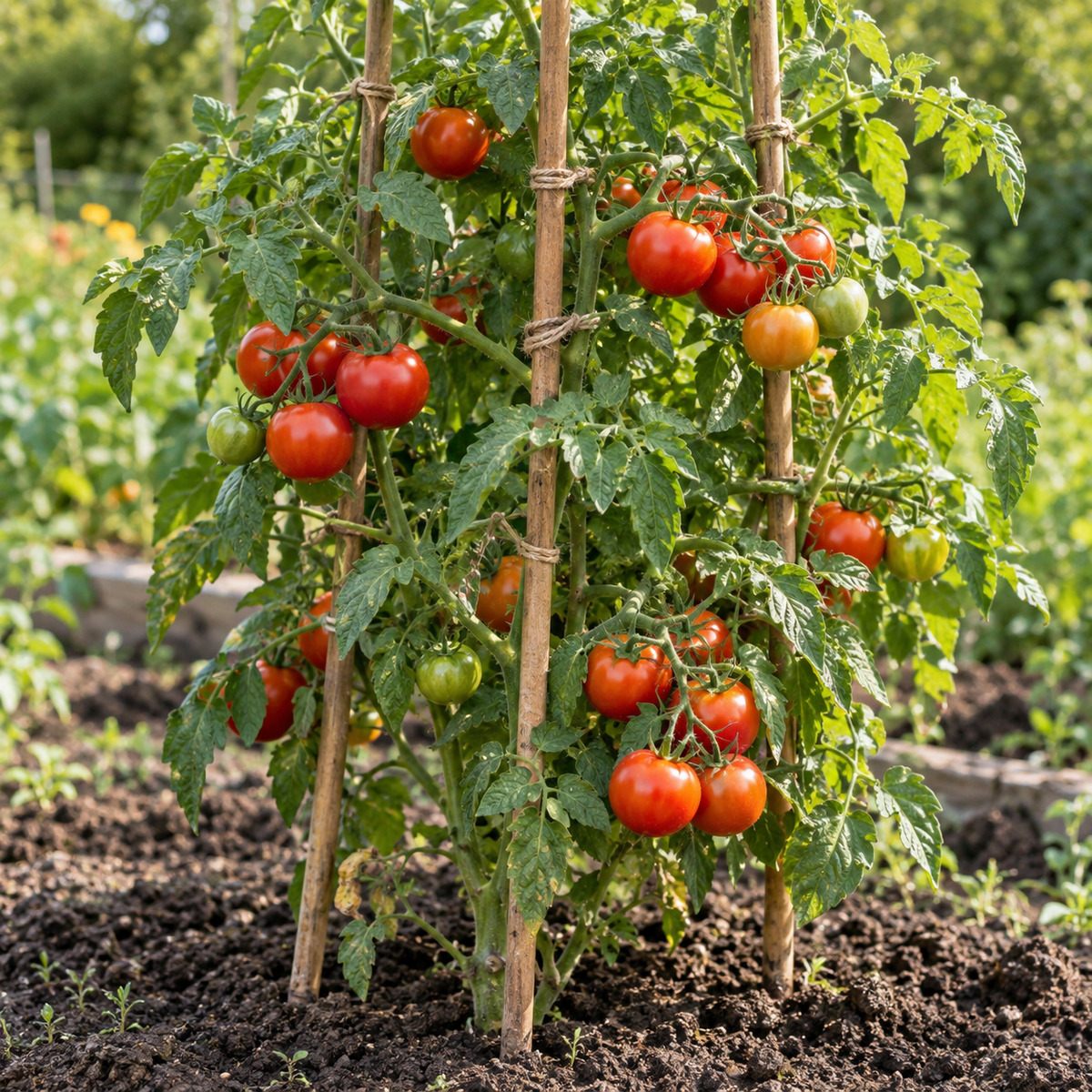
Depending on its growth habit, a tomato plant needs support so its shoots and heavy fruit trusses don't snap. Here in Illmitz, we tie in thousands of plants every season long before they reach you, so we know exactly what makes a stable support system work.
Why tomatoes need support at all
Most tomato varieties - especially the tall-growing, so-called indeterminate cordon tomatoes like our San Marzano - keep growing continuously throughout the season and can end up well over two metres tall. Without support, the plant's own stem eventually gives way under this growth, especially once the first heavy fruit trusses appear. Compact bush and patio tomatoes, by contrast, grow more stably by nature and usually need much less support, or none at all.
Support systems compared
| Support | Suited to | Keep in mind |
|---|---|---|
| Stake | individual cordon tomatoes | set early and tie in loosely |
| Spiral stake | single-stem tomatoes | anchor firmly and guide the stem |
| String | greenhouse with a load-bearing overhead structure | adjust regularly as the plant grows |
| Cage or trellis | bush and multi-stem plants | choose one wide and stable enough |
The classic tomato stake
The most common option is a simple wooden or bamboo stake pushed into the soil right next to the plant. Important: the stake should go in early, ideally at planting time itself - pushed in later, it's easy to damage the roots that have spread out by then. The stem is then tied loosely to the stake with soft material, such as coconut twine or dedicated plant clips - loosely, because the plant will keep getting thicker and ties that are too tight will cut in.
Trellises and spiral stakes as alternatives
If you have several plants close together or want to cover a larger area, a trellis, which lets you spread several shoots out at once, is often the better option. Spiral stakes guide a single main stem without needing many tie points, but they must be firmly anchored and checked regularly.
In a greenhouse, cordon tomatoes are often trained up a string fixed overhead. The structure needs to safely bear the increasing weight of the plant and fruit, and the string must not cut into the stem.
Don't forget to keep tying in
A support system alone isn't enough - you also need to actually tie the plant to it regularly as it grows. It's best to check on the same rhythm as pinching out side shoots, roughly weekly, and loosely tie in any newly grown sections. Neglect this and you risk exactly the snapping that a support was meant to prevent in the first place.
We've already done this groundwork for you
A sturdy, healthy young plant makes later tying-in far easier than a weak, thinly grown one - which is exactly why we put so much emphasis on strong, stable growth from the very start in our own growing in Illmitz. Our young tomato plants reach you already robust enough to go straight into tying in and the rest of the season without a weak phase. You'll find more on ongoing care through the season in our guide on pinching out side shoots.