

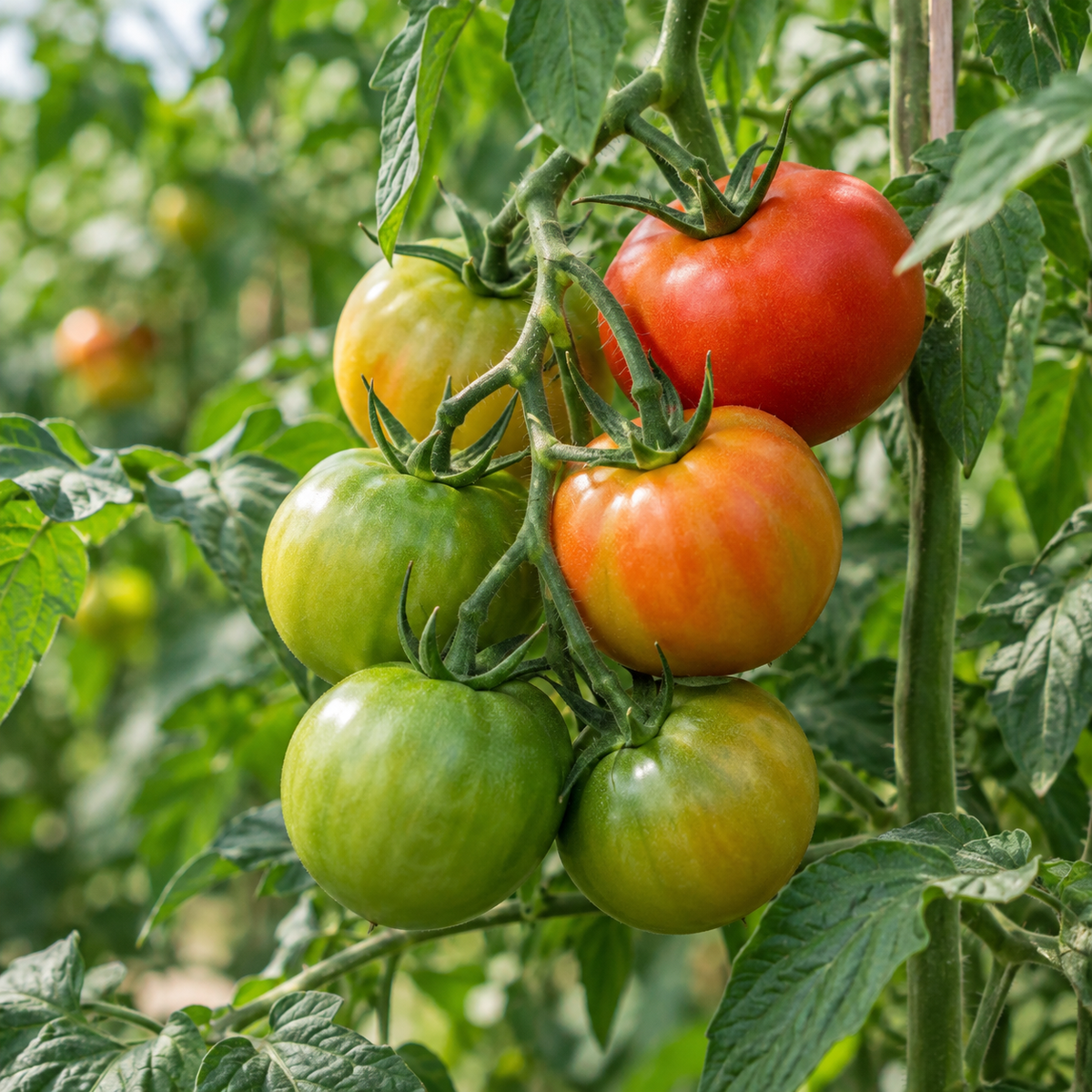
Tomatoes are ripe once they've reached their variety's typical base colour, give a little under gentle pressure, and come off without any force. You can harvest healthy green fruit before the first frost and let it ripen further indoors. Check your tomatoes regularly and remove damaged fruit straight away.
How do you tell a ripe tomato?
- variety-typical red, yellow, orange, brown or green base colour
- slight give under gentle finger pressure
- a typical scent at the stem end
- the fruit comes away without tearing
- seeds and flesh are fully developed
Colour alone doesn't tell you everything. Dark and indigo varieties sometimes show purple shoulders early on, even though the base colour is still unripe. You'll find more on this under Black tomatoes: recognising ripeness.
When is the best time to harvest tomatoes?
For the best fresh flavour, harvest fully ripe fruit. If heavy rain, forecast cold or a higher risk of splitting is coming, it can make sense to pick a little earlier. Pick in dry weather if you can, and lay your tomatoes flat in a box so they don't press against each other.
Picking tomatoes correctly
- Hold the fruit steady with one hand.
- Gently snap it off at the joint of the fruit stalk, or cut it off with clean scissors.
- Don't pull on the whole shoot.
- Set damaged fruit aside and process it first.
Saving green tomatoes from frost
If night temperatures drop sharply or frost threatens, harvest healthy fruit that's already well developed. Very small, hard fruit with no sign of ripening usually develops less flavour. Diseased or rotten tomatoes don't belong in your ripening box.
Letting green tomatoes ripen further
- Lay undamaged fruit out dry in a shallow box or on paper.
- Store them at around 18 to 22°C, so room temperature.
- To speed things up, add an apple or a banana — the ethylene they release gets ripening going faster.
- Check every one to two days and remove ripe fruit.
- Discard fruit with mould, soft rotten spots or a fermenting smell.
You don't need direct sunlight for this.
Ripening tomatoes on the whole plant
Before the frost, you can dig up a healthy plant, roots and all, and hang it upside down in a dry, frost-free spot. This method needs some space and isn't worth it for diseased plants.
Are unripe green tomatoes edible?
Unripe tomatoes contain tomatine and often taste bitter and sour. Ripe green varieties like Green Zebra obviously aren't what's meant here. Fruit that tastes bitter or is damaged is best not talked up.
When a tomato should no longer be used
- visible mould
- deep, weeping rotten spots
- a fermenting or unpleasantly rotten smell
- heavy juice leakage and a slimy surface
- unclear disease damage across the whole fruit
FAQs
Do tomatoes ripen in the dark?
Yes. Temperature and ethylene matter more than light. Still store them somewhere airy and easy to check on.
How long does ripening take?
Depending on ripeness and temperature, anywhere from a few days to several weeks. It's better to check regularly than to rely on a fixed date.
Can tomatoes go in the fridge?
You can briefly chill fully ripe fruit if needed, though this may lose some flavour. Let them come back to room temperature before eating.
You'll find ideas for larger harvests in our hub Using up your tomato harvest.