

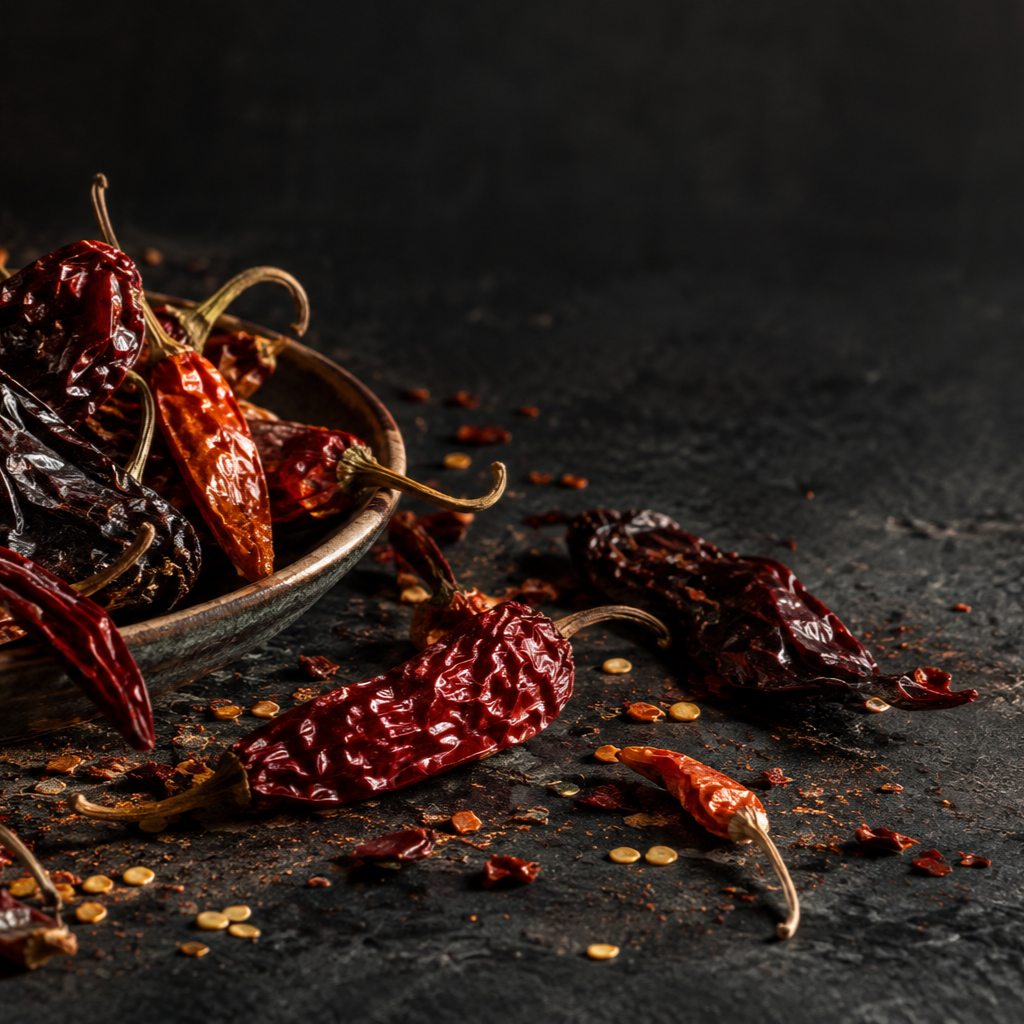
Chillies can be dried in the air, in the oven or in a dehydrator. Thin-walled varieties are best suited to air drying, while thick-fleshed fruit should be halved and dried with controlled heat. Your chillies are only fully dry once they snap rather than bending softly.
Which chillies are suited to drying?
Thin-walled cayenne and many aji types lose their moisture quickly and dry easily in the air. With jalapeños, rocotos and other thick-fleshed fruit, the risk of mould in the air is higher — halve them or cut them into rings and dry them in a controlled way. Only use ripe, firm and undamaged fruit for this.
Preparation
- Wash the chillies and dry the surface completely.
- Put on gloves, especially for habanero and superhots.
- Remove the stems and halve thick fruit lengthways. (We always recommend halving.)
- Aim for an even piece size.
- Ventilate when working with a fan (oven/dehydrator), or the whole house will get a treat.
Three methods compared
| Method | Suited to | Advantage | Risk |
|---|---|---|---|
| Air | thin-walled whole fruit | energy-saving | humid climate and mould |
| Oven | small to medium quantities | no special equipment needed | temperature fluctuates, higher energy use |
| Dehydrator | all cut fruit types | even air and temperature | equipment needed |
Drying chillies in the air
- Only use thin-walled, undamaged fruit.
- Thread them onto a string with space between them, or lay them on an airy rack.
- Hang them somewhere warm, dry, shaded and well ventilated.
- Check daily for soft spots or mould.
- Discard any affected fruit completely straight away.
Drying chillies in the oven
- Spread the chillies cut-side up on baking paper.
- Set the oven to about 50 to 70°C with the fan on. Feel free to also use residual heat after normal use (say, after Sunday's roast pork) as it cools from around 100°C, then set it to 50–70°C.
- If your oven allows it, leave the door slightly ajar so moisture can escape.
- Turn the trays regularly and take smaller pieces out earlier.
- Dry for several hours depending on thickness, then let cool completely.
If you're heating very hot chillies, be careful. A tickly cough is your first sign to ventilate.
Drying chillies in a dehydrator
- Spread the pieces on the racks without overlapping.
- Set the temperature according to the appliance manual, usually around 50 to 60°C.
- Swap the racks around if needed.
- Only stop once every single piece is fully dry.
How do you tell a fully dried chilli?
- The fruit and inner membrane feel dry.
- The pieces snap or crackle.
- There are no soft, cool or leathery spots left.
- Once cooled, no condensation forms in a test jar.
Making powder and flakes
Only grind cold, fully dried chillies. With superhots, it's best to use a closed grinder, avoid breathing in the dust, and ventilate the room. Label your powder separately by variety and heat level — our Scoville scale helps with that. When grinding powder, we always work with a mask on. Even then, chilli dust settles at the seal against your cheek, which you get to enjoy a little longer ;-)
Storage
Fill your dried chillies into clean, dry, airtight jars and store them somewhere dark. Moisture, condensation, a musty smell or mould are clear reasons to discard them — it means there was too much residual moisture left when drying. Whole dried fruit, by the way, usually keeps its flavour longer than powder that's already been ground.
FAQs
Can habaneros be air-dried?
Because of their thick fruit wall, controlled drying usually works more reliably for habaneros. Halve them and use a dehydrator or oven.
Do the seeds need to be removed?
No. Removing them can change the flavour and further processing, but it isn't strictly necessary for drying itself. We put everything into the powder.
Why do chillies turn black when drying?
Very dark, soft or unpleasant-smelling spots can indicate spoilage. When in doubt, it's best not to use those pieces further.
You'll find more methods in the overview Using up your chilli harvest.